Loading city...
Skip to main content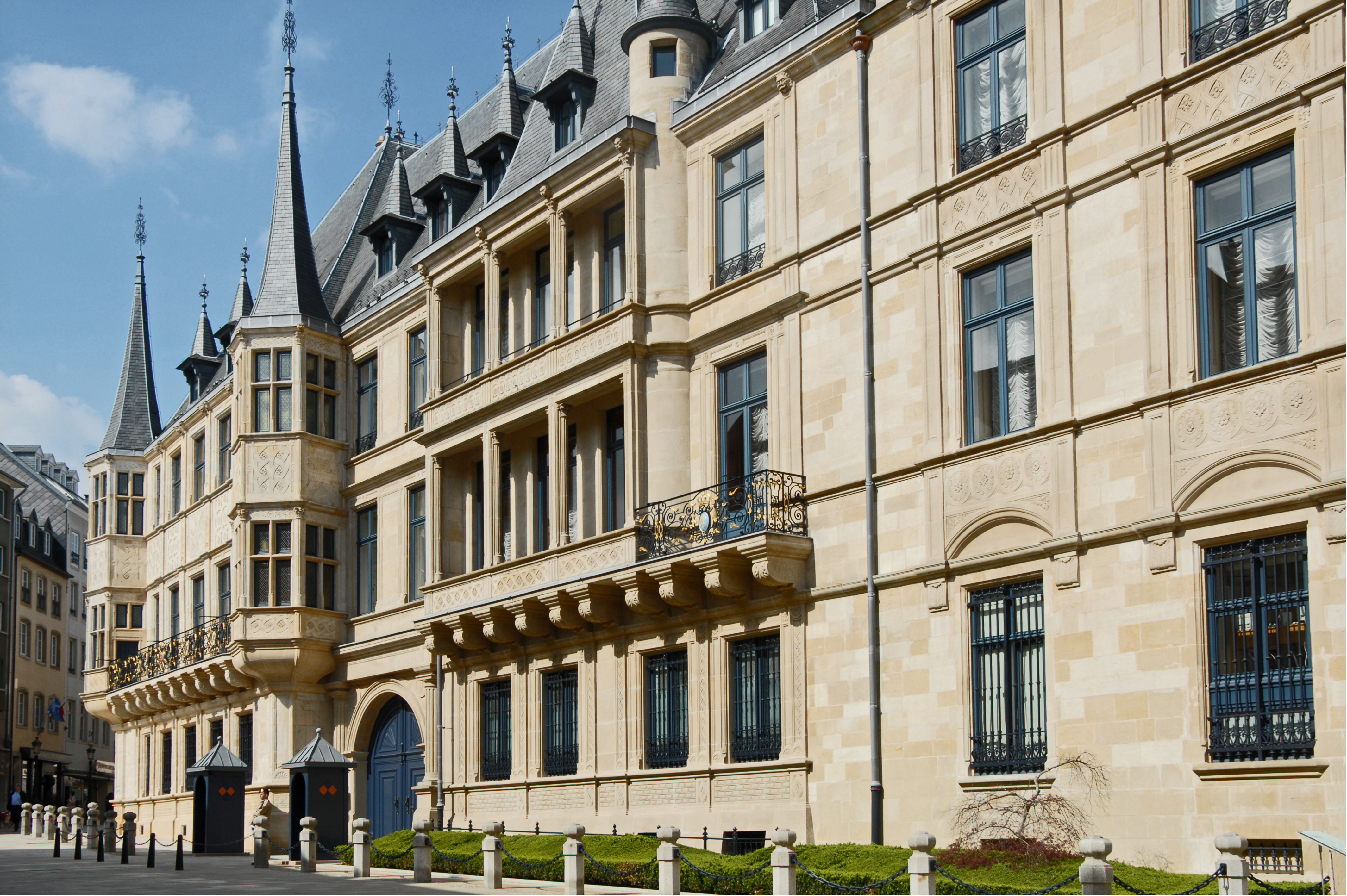 Plan a trip to Luxembourg City →
Sample plans for Luxembourg City:
Luxembourg City
31 places
31 places
⭐European Court of Justice
The European Court of Justice (Court of Justice of the European Union) is the EU's supreme judicial body, housed in a striking campus of gold-clad twin towers and modernist wings designed by architect Dominique Perrault on the Kirchberg plateau.
architecturemodernIconic
30 minFree
⭐Notre-Dame Cathedral
Notre-Dame Cathedral (Cathedrale Notre-Dame de Luxembourg) is a 17th-century former Jesuit church that became the country's only cathedral in 1870. It blends Late Gothic ribbed vaulting with Renaissance portals and Baroque organ lofts.
architectureReligiousGothic
30 minFree
⭐Adolphe Bridge
The Adolphe Bridge (Pont Adolphe) is Luxembourg City's best-known landmark - a grand double-arched stone viaduct spanning 153 metres across the Petrusse Valley, connecting the city centre to the Gare district.
architectureIconicphoto op
20 minFree
⭐Grand Ducal Palace
The Grand Ducal Palace is the official residence of the Grand Duke of Luxembourg and the most prominent secular building in the old town. Its ornate Flemish Renaissance facade on Rue du Marche-aux-Herbes dates from 1572, with later Spanish-Moorish additions.
historyarchitectureroyal
60 min€15
🏘Kirchberg Plateau
The Kirchberg Plateau is Luxembourg's modern showpiece district, a planned quarter of bold EU institutions, contemporary museums, concert halls, and parkland connected to the old town by the Grande-Duchesse Charlotte Bridge (Red Bridge).
neighborhoodmodernarchitecture
60 minFree
⭐Luxembourg American Cemetery and Memorial
The Luxembourg American Cemetery and Memorial is the final resting place of 5,076 American service members who died in World War II, including General George S. Patton Jr. Maintained by the American Battle Monuments Commission, the 50-acre site is immaculately kept.
memorialmilitaryhistory
60 minFree
⭐Gëlle Fra – Monument of Remembrance
Gelle Fra ('Golden Lady') is a gilded female figure standing atop a 21-metre granite obelisk on the Constitution Square (Place de la Constitution). She symbolises freedom and commemorates Luxembourg's volunteers who died in World War I.
memorialIconicFree Entry
15 minFree
⭐Bock Casemates
The Bock Casemates are a vast network of underground tunnels and galleries carved into the sandstone of the Bock promontory, the very rock on which Luxembourg was founded in 963 AD. Designated a UNESCO World Heritage Site in 1994, these 17 km of passages once sheltered up to 35,000 soldiers and their horses during sieges.
historyunescounderground
60 min€11
🏛MUDAM – Musée d'Art Moderne Grand-Duc Jean
MUDAM (Musee d'Art Moderne Grand-Duc Jean) is Luxembourg's flagship contemporary art museum, housed in a luminous limestone-and-glass building designed by I. M. Pei atop the remains of Fort Thungen on the Kirchberg plateau.
artcontemporaryarchitecture
90 min€10
⭐Philharmonie Luxembourg
Philharmonie Luxembourg is a world-class concert hall seating 1,500 in its Grand Auditorium, designed by French architect Christian de Portzamparc. Its cluster of slender white columns has become an architectural icon of the Kirchberg plateau.
musicarchitecturemodern
120 minFree
🏛Fort Thüngen – Three Acorns
Fort Thungen, popularly known as the 'Three Acorns' (Drai Eechelen) for its distinctively capped towers, is a restored 18th-century Vauban-era fort on the Kirchberg plateau. It now houses the Fortress Museum, which tells the military history of Luxembourg.
historyCastlemuseum
60 minFree
⭐Place Guillaume II
Place Guillaume II (known locally as 'Knuedler') is the city's largest square, anchored by an equestrian statue of Grand Duke William II and flanked by the neo-classical City Hall. It hosts Luxembourg's main market twice a week.
historyarchitectureFree Entry
15 minFree
🛍Grand Rue – Shopping Street
Grand Rue is the main pedestrianised shopping artery of Luxembourg City's old town, running roughly north-south from the Grand Ducal Palace area to the Place d'Armes. It mixes international fashion chains with independent Luxembourg boutiques.
shoppingFashionlocal
60 minFree
⭐Neumünster Abbey – Cultural Meeting Centre
Neumuenster Abbey (Abbaye de Neumuenster) is a beautifully restored 17th-century Benedictine abbey in the Grund quarter, now serving as the city's premier cultural meeting centre with concerts, exhibitions, and public talks.
culturearchitecturehistory
45 minFree
👁Pfaffenthal Panoramic Elevator
The Pfaffenthal Panoramic Elevator is a free-standing glass lift tower that connects the Ville Haute (upper city) to the Pfaffenthal neighbourhood and its train station, traversing a 60-metre cliff in 30 seconds.
viewpointphoto opFree Entry
15 minFree
⭐Place d'Armes
Place d'Armes is the pedestrianised social hub of Luxembourg City's old town, lined with cafe terraces and chestnut trees. Originally the parade ground for the fortress garrison, it now hosts open-air concerts and seasonal markets.
culturelivelyFree Entry
20 minFree
⭐Saint Michael's Church
Saint Michael's Church (Eglise Saint-Michel) is the oldest surviving religious site in Luxembourg City, founded in 987 on the site of Count Siegfried's original castle chapel. The current Romanesque-Gothic structure dates mostly from the 17th century.
ReligiousMedievalhistory
20 minFree
🏘Pfaffenthal Quarter
Pfaffenthal is one of the quietest lower-town quarters, squeezed between the Alzette River and the Kirchberg cliff. Its narrow lanes of pastel-coloured houses and the Vauban circular towers give it a village feel minutes from the city centre.
neighborhoodquiettraditional
45 minFree
🏛National Museum of Natural History
The National Museum of Natural History (natur musee) sits in the Grund quarter and offers hands-on science exhibits spanning geology, zoology, ecology, and space.
museumscienceFamily Friendly
60 min€5
🎨Casino Luxembourg – Forum d'Art Contemporain
Casino Luxembourg - Forum d'Art Contemporain is a laboratory for contemporary art occupying a stately 19th-century casino building on Rue Notre-Dame. Despite its name, there is no gambling - only cutting-edge art, video installations, and artist residencies.
artcontemporaryFree Entry
45 minFree
Notice any incorrect information? Let us know →