Loading city...
Skip to main content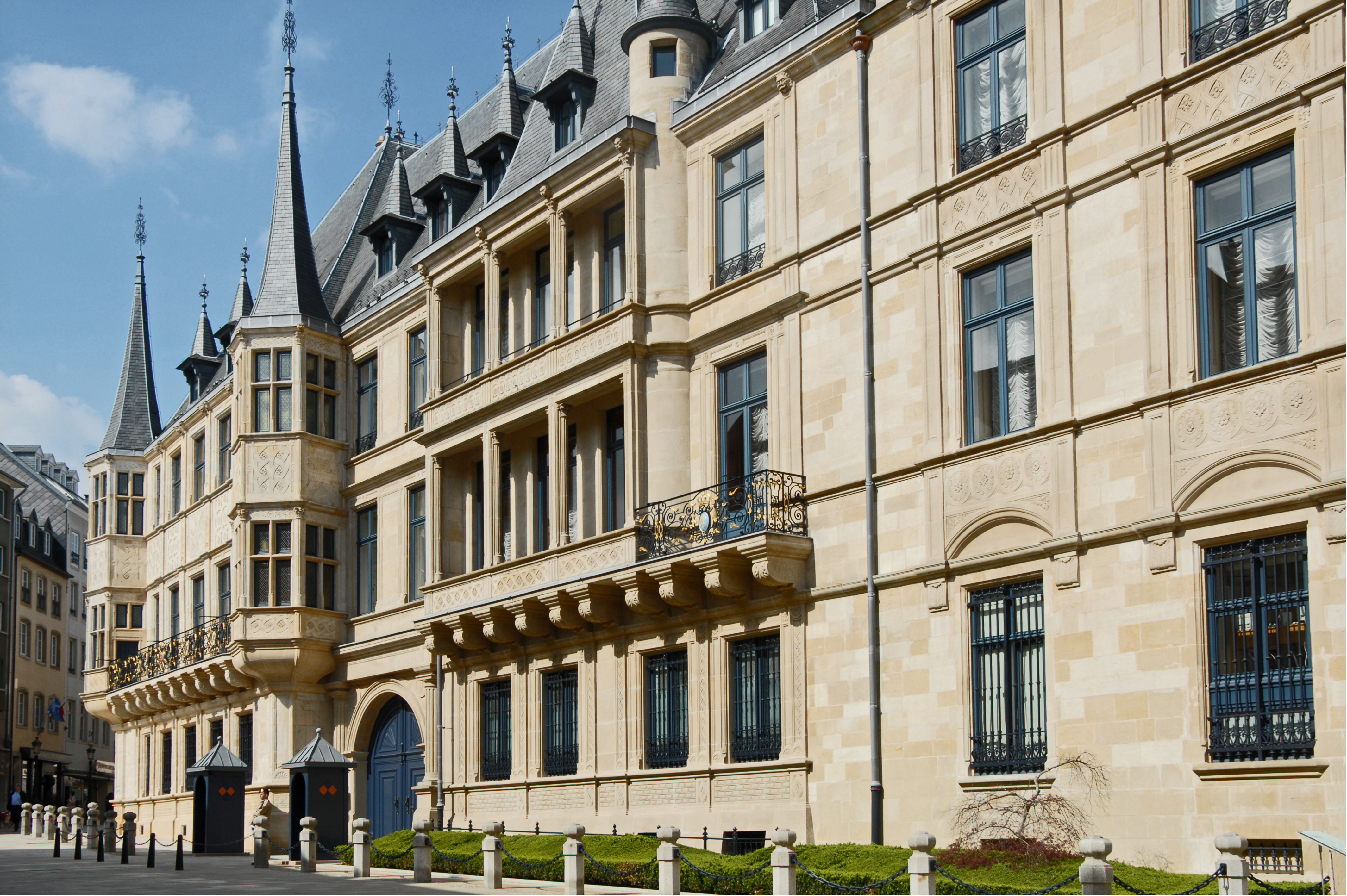
Attractions in Luxembourg City
13 attractions selected in this guide.
 European Court of JusticeAttraction · 30 min · Free
The European Court of Justice (Court of Justice of the European Union) is the EU's supreme judicial body, housed in a striking campus of gold-clad twin towers and modernist wings designed by architect Dominique Perrault on the Kirchberg plateau.
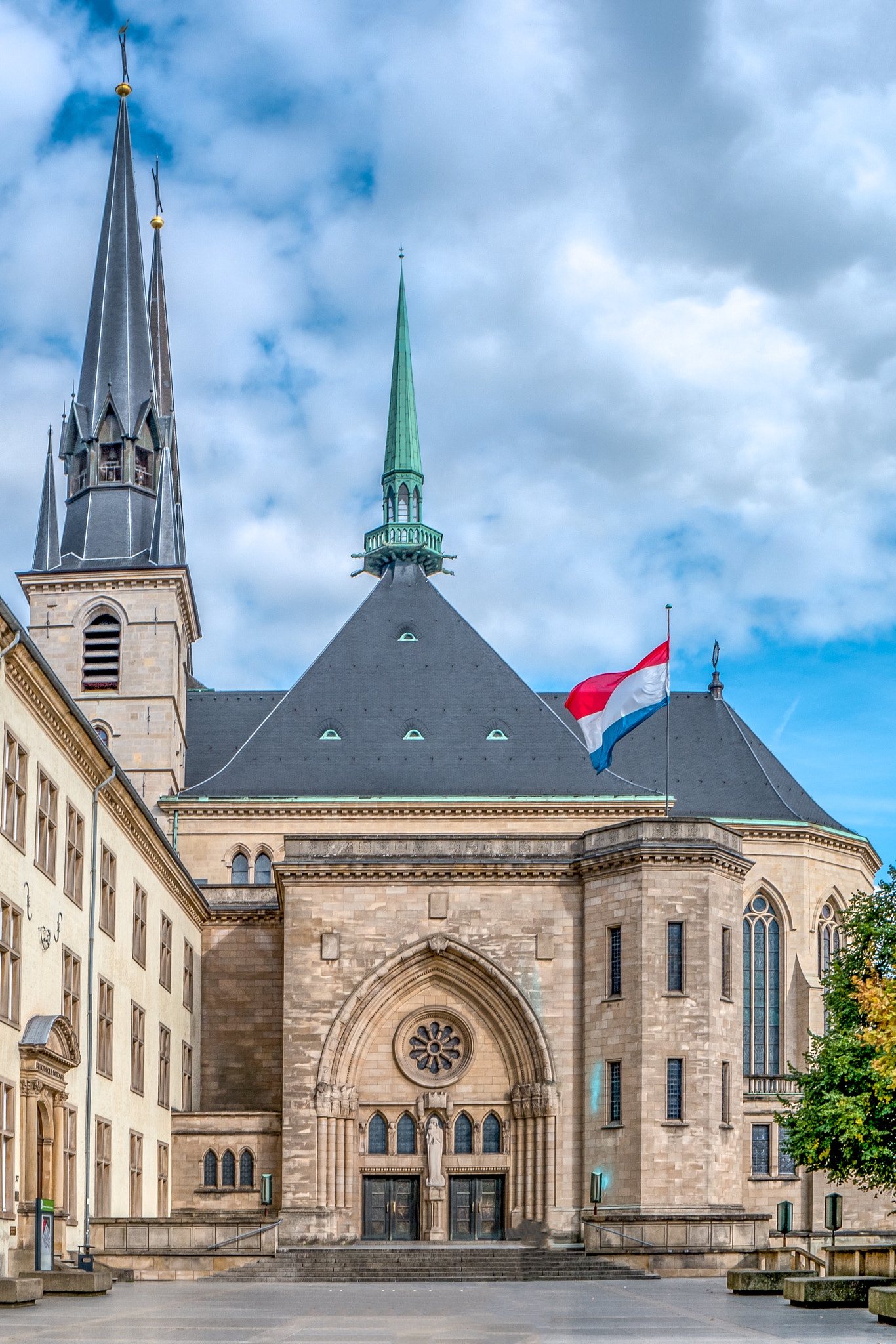 Notre-Dame CathedralAttraction · 30 min · Free
Notre-Dame Cathedral (Cathedrale Notre-Dame de Luxembourg) is a 17th-century former Jesuit church that became the country's only cathedral in 1870. It blends Late Gothic ribbed vaulting with Renaissance portals and Baroque organ lofts.
 Grand Ducal PalaceAttraction · 1h · €15
The Grand Ducal Palace is the official residence of the Grand Duke of Luxembourg and the most prominent secular building in the old town. Its ornate Flemish Renaissance facade on Rue du Marche-aux-Herbes dates from 1572, with later Spanish-Moorish additions.
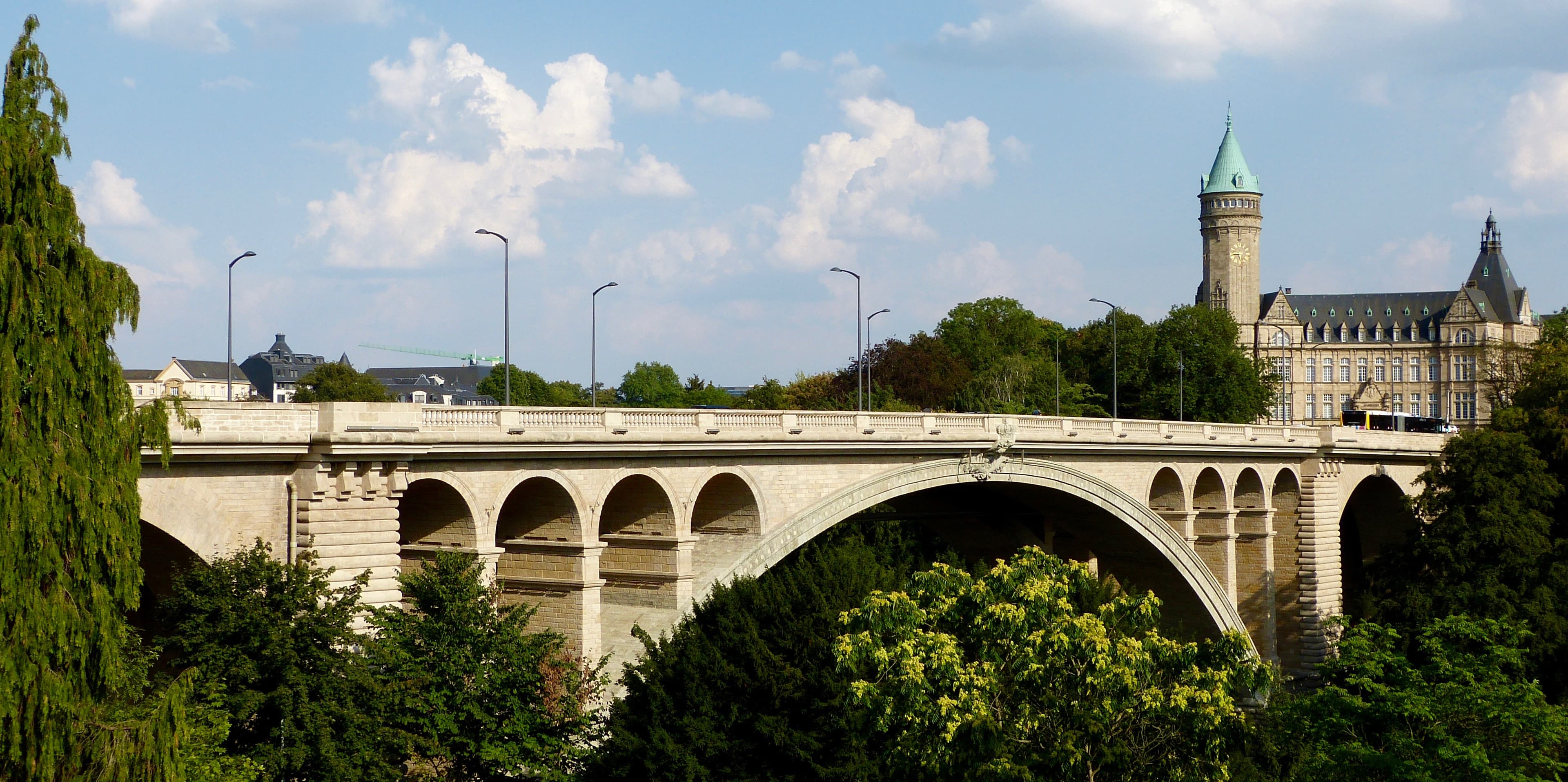 Adolphe BridgeAttraction · 20 min · Free
The Adolphe Bridge (Pont Adolphe) is Luxembourg City's best-known landmark - a grand double-arched stone viaduct spanning 153 metres across the Petrusse Valley, connecting the city centre to the Gare district.
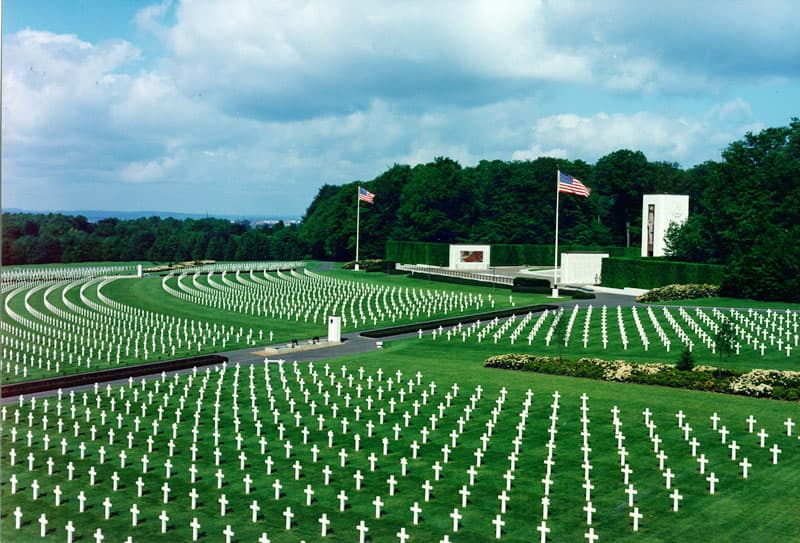 Luxembourg American Cemetery and MemorialAttraction · 1h · Free
The Luxembourg American Cemetery and Memorial is the final resting place of 5,076 American service members who died in World War II, including General George S. Patton Jr. Maintained by the American Battle Monuments Commission, the 50-acre site is immaculately kept.
 Gëlle Fra – Monument of RemembranceAttraction · 15 min · Free
Gelle Fra ('Golden Lady') is a gilded female figure standing atop a 21-metre granite obelisk on the Constitution Square (Place de la Constitution). She symbolises freedom and commemorates Luxembourg's volunteers who died in World War I.
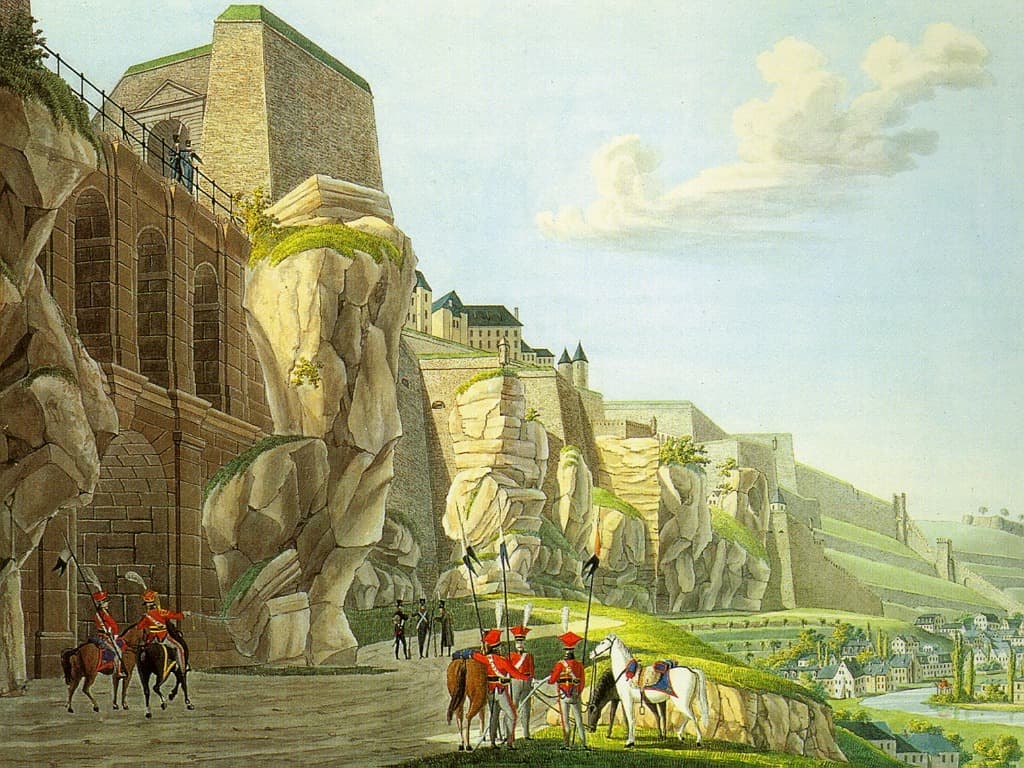 Bock CasematesAttraction · 1h · €11
The Bock Casemates are a vast network of underground tunnels and galleries carved into the sandstone of the Bock promontory, the very rock on which Luxembourg was founded in 963 AD. Designated a UNESCO World Heritage Site in 1994, these 17 km of passages once sheltered up to 35,000 soldiers and their horses during sieges.
- Philharmonie LuxembourgAttraction · 2h · Free
Philharmonie Luxembourg is a world-class concert hall seating 1,500 in its Grand Auditorium, designed by French architect Christian de Portzamparc. Its cluster of slender white columns has become an architectural icon of the Kirchberg plateau.
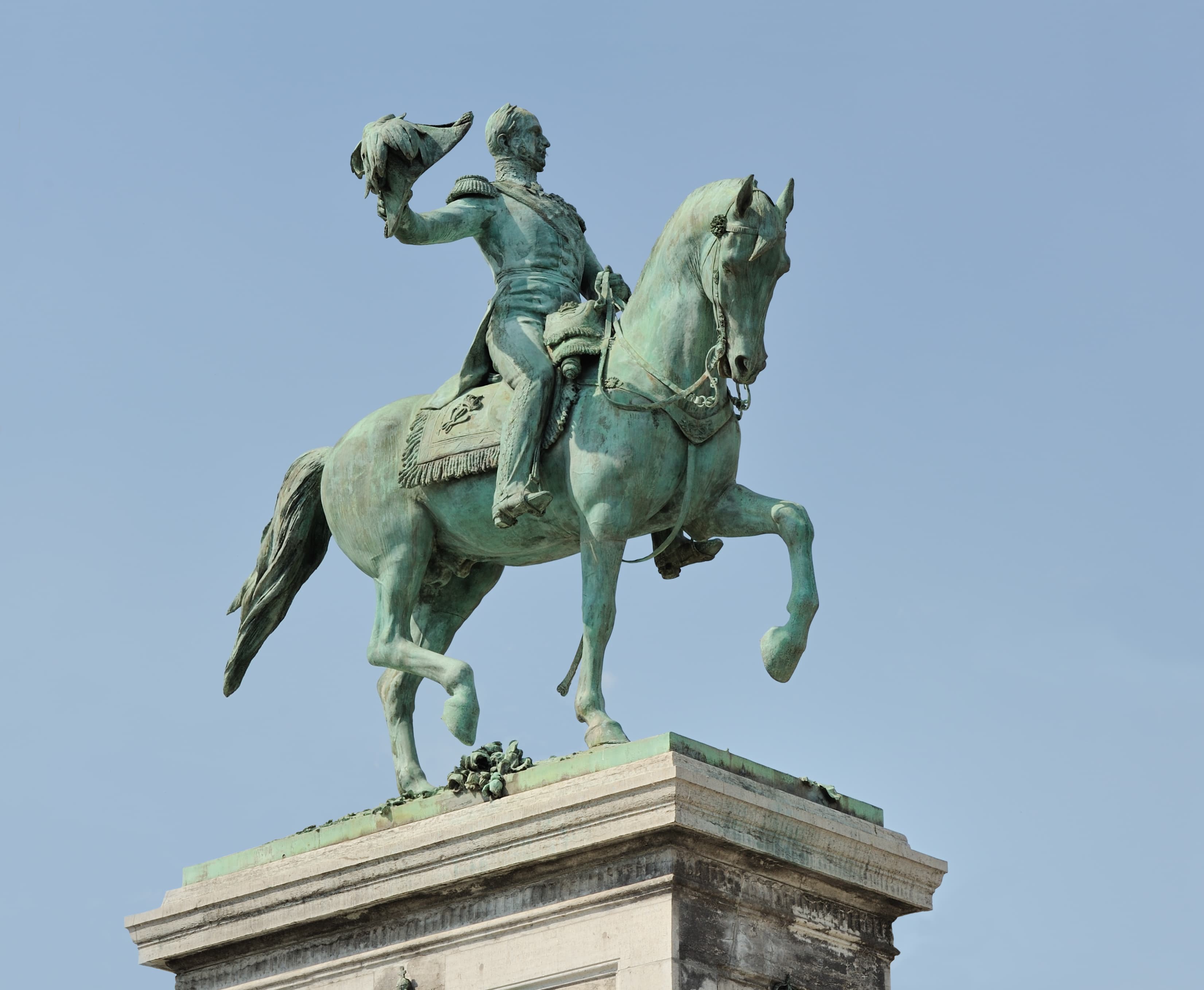 Place Guillaume IIAttraction · 15 min · Free
Place Guillaume II (known locally as 'Knuedler') is the city's largest square, anchored by an equestrian statue of Grand Duke William II and flanked by the neo-classical City Hall. It hosts Luxembourg's main market twice a week.
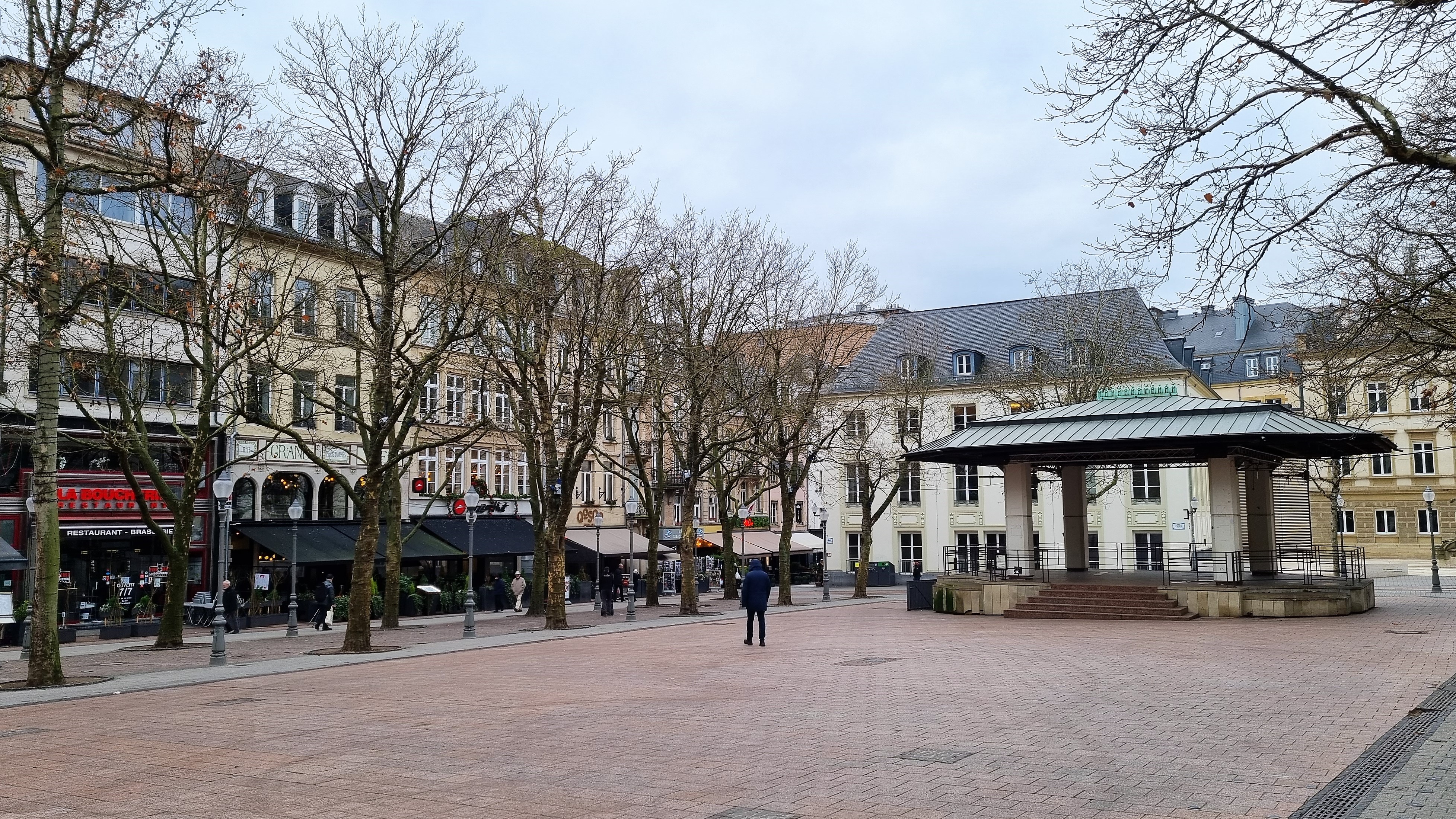 Place d'ArmesAttraction · 20 min · Free
Place d'Armes is the pedestrianised social hub of Luxembourg City's old town, lined with cafe terraces and chestnut trees. Originally the parade ground for the fortress garrison, it now hosts open-air concerts and seasonal markets.
 Saint Michael's ChurchAttraction · 20 min · Free
Saint Michael's Church (Eglise Saint-Michel) is the oldest surviving religious site in Luxembourg City, founded in 987 on the site of Count Siegfried's original castle chapel. The current Romanesque-Gothic structure dates mostly from the 17th century.
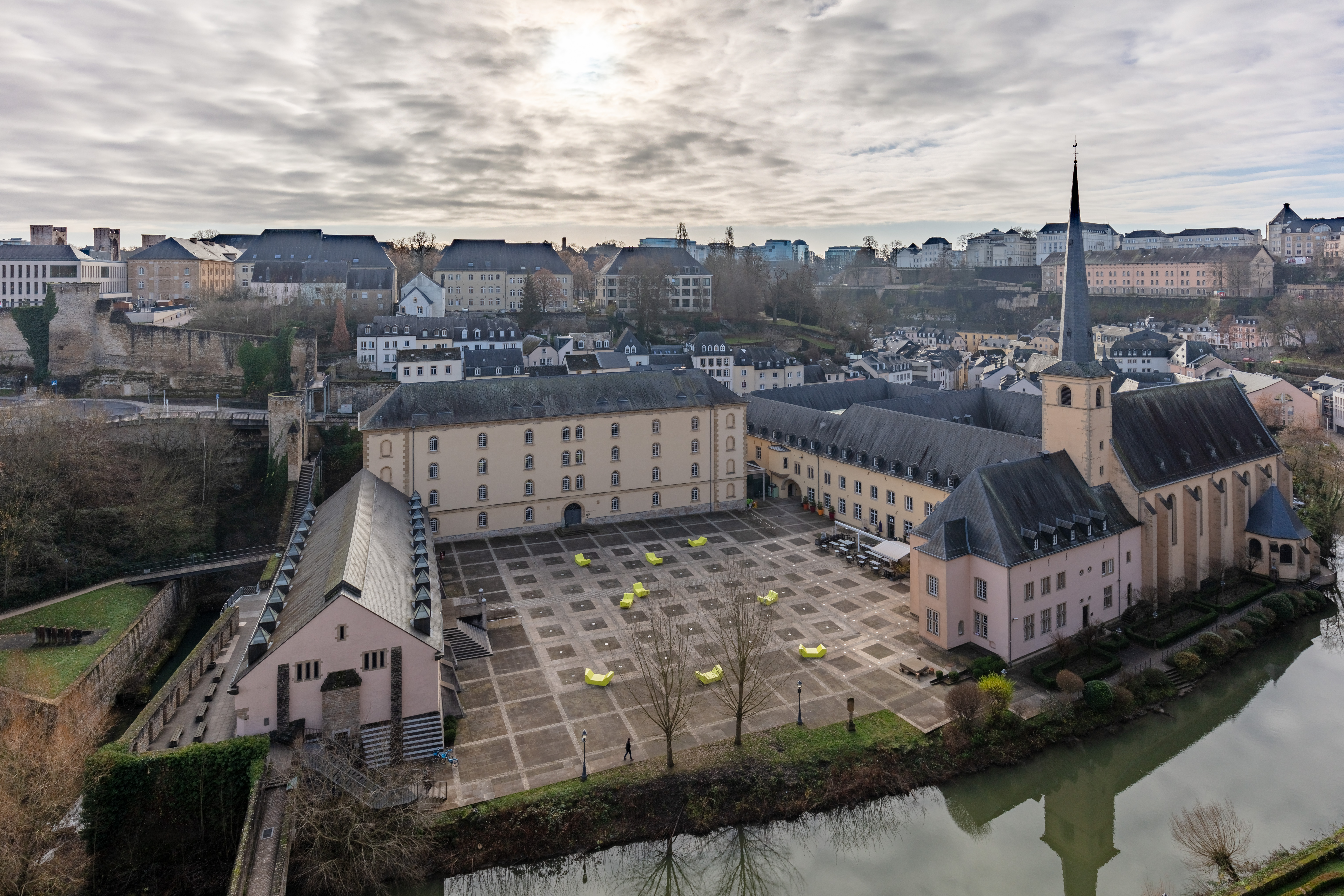 Neumünster Abbey – Cultural Meeting CentreAttraction · 45 min · Free
Neumuenster Abbey (Abbaye de Neumuenster) is a beautifully restored 17th-century Benedictine abbey in the Grund quarter, now serving as the city's premier cultural meeting centre with concerts, exhibitions, and public talks.
- Pétrusse CasematesAttraction · 45 min · €8
The Petrusse Casemates are a second subterranean defence system running beneath the Petrusse Valley, complementing the Bock Casemates. They are part of the UNESCO-listed Fortifications of Luxembourg City and were carved primarily in the 17th and 18th centuries.