Loading city...
Skip to main content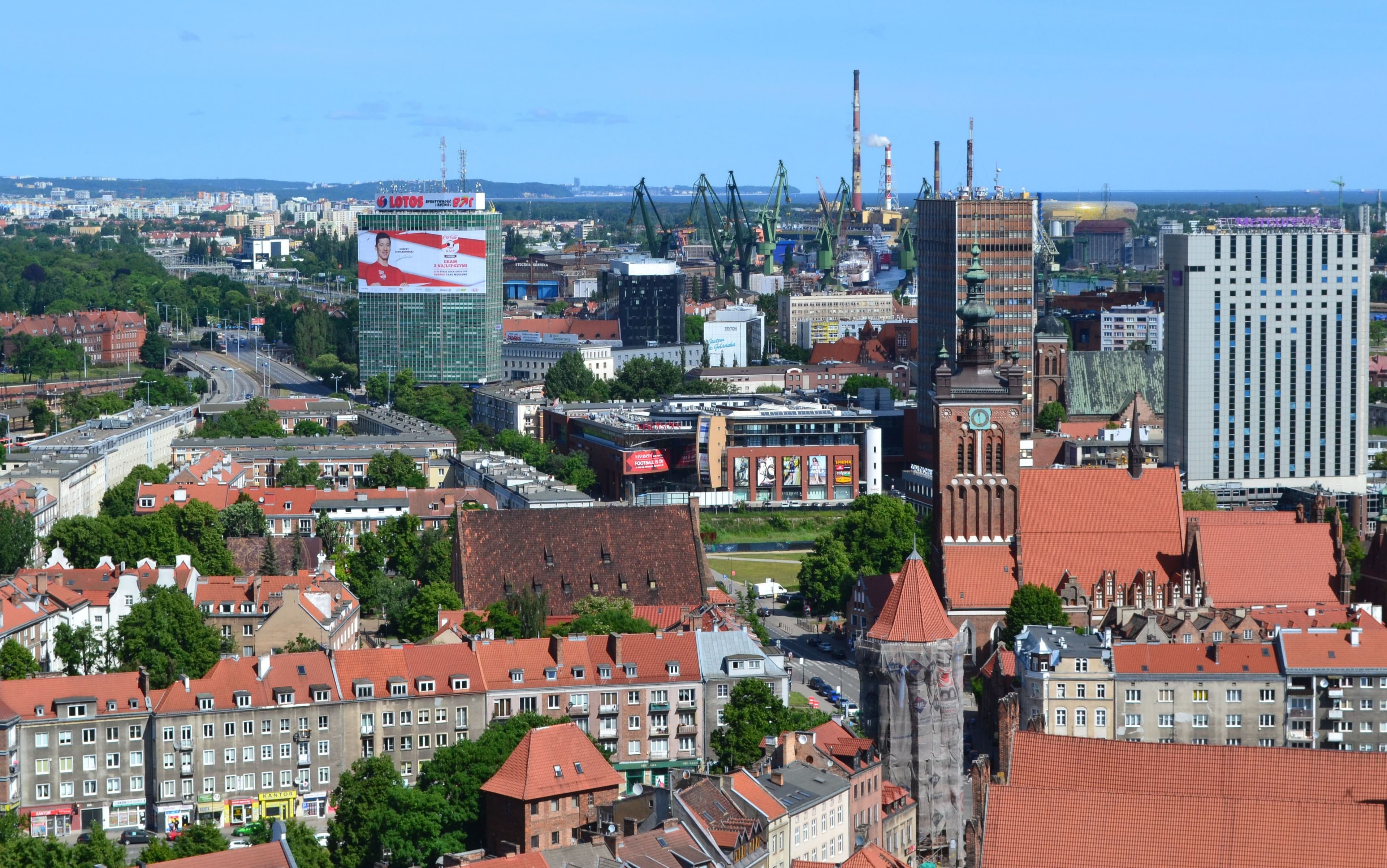 Plan a trip to Gdańsk →
Sample plans for Gdańsk:
Gdańsk
41 places · 1 airports
41 places
🏘Gdańsk Old Town
Gdańsk's Old Town (*Stare Miasto*) lies north of the more famous Main Town, centered around the Great Mill and St. Catherine's Church. Less restored than its southern neighbor, it offers a quieter, more local atmosphere with craft breweries, small galleries, and leafy canal-side streets.
neighborhoodwalkhistory
60 minFree
🏛Amber Museum
The Amber Museum (*Muzeum Bursztynu*) is dedicated to Baltic amber — the 'Gold of the North' — and is housed in the Great Mill (*Wielki Młyn*), the largest medieval industrial building in Europe. The museum explores amber's natural history, its role in Gdańsk's economy, and showcases exquisite amber artworks spanning centuries.
museumuniquehistory
60 min37 zł
🎯Polsat Plus Arena Gdańsk
PGE Arena Gdańsk (now Polsat Plus Arena Gdańsk) is a modern football stadium built for the UEFA Euro 2012 championship. Its distinctive amber-and-gold facade is designed to evoke a drop of Baltic amber — Gdańsk's signature material. Home to Lechia Gdańsk, it hosts football matches, concerts, and stadium tours.
Sportsfootballmodern
90 min25 zł
⭐St. Mary's Church
St. Mary's Church (*Bazylika Mariacka*) is one of the largest brick churches in the world, capable of holding 25,000 worshippers. Its massive Gothic nave dominates the Gdańsk skyline and houses a stunning 15th-century astronomical clock, a monumental altarpiece, and a tower offering commanding views of the city.
IconicarchitectureReligious
60 min16 zł
⭐Westerplatte
Westerplatte is the peninsula at the mouth of the Dead Vistula where World War II began. On 1 September 1939, the German battleship *Schleswig-Holstein* opened fire on the small Polish garrison here, marking the first military engagement of the conflict. Today, a monument and memorial park honor the 182 Polish soldiers who held out for seven days against overwhelming odds.
historymilitarymemorial
60 minFree
🏛Museum of the Second World War
The Museum of the Second World War (*Muzeum II Wojny Światowej*) is one of Europe's most comprehensive and moving WWII museums. Housed in a striking angular building tilted at a dramatic 60-degree angle, its permanent exhibition spans 5,000 m² across 18 thematic sections, placing Gdańsk's experience within the broader context of global conflict.
historymuseummodern
150 min29 zł
🏛Crane (Żuraw)
The Crane (*Żuraw*) is Europe's largest surviving medieval port crane and Gdańsk's most recognizable waterfront landmark. Built in 1442–1444, this massive half-timbered structure served as both a city gate and a cargo crane, capable of lifting loads of up to 4 tons and stepping ship masts. It now forms part of the National Maritime Museum.
IconichistoryMedieval
60 min23 zł
⭐Oliwa Cathedral
Oliwa Cathedral (*Katedra Oliwska*) is a medieval Cistercian church in the Oliwa district, famous for its remarkable Rococo organ with 7,876 pipes and a series of moving figures. The 107-meter-long nave makes it one of the longest churches in Poland, and its ornate Baroque interior contrasts dramatically with the austere Romanesque-Gothic exterior.
Religiousarchitecturemusic
45 minFree
🌳Oliwa Park
Oliwa Park (*Park Oliwski*) is a beautifully landscaped garden surrounding Oliwa Cathedral, blending formal French garden sections with romantic English-style pastoral grounds. Shaded by centuries-old trees, the park features ornamental ponds, a botanical garden section, and seasonal flower displays.
parkGardenpeaceful
60 minFree
🏛Artus Court
Artus Court (*Dwór Artusa*) was the social and commercial heart of Gdańsk's merchant class from the 14th century onward. Named after the legend of King Arthur, this grand Gothic hall served as a prestigious meeting place where traders struck deals and celebrated civic occasions. It now displays period furnishings and one of the world's tallest tiled stoves.
historyarchitectureart
45 min16 zł
⭐Great Armoury
The Great Armoury (*Wielka Zbrojownia*) is one of the finest examples of Dutch Mannerist architecture outside the Netherlands. Built between 1600 and 1609, this lavishly decorated arsenal building served as an arms depot and military warehouse for the Free City of Gdańsk.
architecturehistoryRenaissance
15 minFree
⭐Neptune Fountain
The Neptune Fountain (*Fontanna Neptuna*) is Gdańsk's most iconic symbol, standing before Artus Court on the Long Market since 1633. The bronze figure of Neptune, god of the sea, clutches a trident and presides over the city's central square — a fitting emblem of Gdańsk's maritime identity.
Iconicfountainphoto op
15 minFree
🏛European Solidarity Centre
The European Solidarity Centre (*Europejskie Centrum Solidarności*) is a world-class museum and cultural institution documenting the rise of the Solidarity trade union and its role in the peaceful collapse of communism. Opened in 2014, the rust-colored building evokes the texture of a ship's hull, standing at the site of the historic Gdańsk Shipyard.
historymuseummodern
120 min35 zł
🏛Main Town Hall
The Main Town Hall (*Ratusz Głównego Miasta*) is a Gothic-Renaissance masterpiece standing at the heart of Gdańsk's Long Market. Built between 1379 and 1492, and crowned with a gilded statue of King Sigismund II Augustus, it houses the Museum of Gdańsk's permanent exhibition on the city's history from medieval Hanseatic glory through wartime destruction and post-war reconstruction.
historyarchitectureIconic
60 min35 zł
🏛National Maritime Museum
The National Maritime Museum (*Narodowe Muzeum Morskie*) is spread across several buildings on both banks of the Motława River, including the iconic Crane and granary buildings on Ołowianka Island. It chronicles Poland's maritime heritage from Viking-era trade routes to modern shipbuilding.
museumhistoryWaterfront
90 min23 zł
🏛Gdańsk National Museum
The Gdańsk branch of the National Museum (*Muzeum Narodowe w Gdańsku*) occupies a former Gothic Franciscan monastery in the southern part of the Main Town. Its collection spans medieval to modern art, anchored by Hans Memling's monumental *Last Judgment* triptych — one of the most important Flemish paintings in Poland.
museumartGothic
90 min25 zł
⭐Golden Gate
The Golden Gate (*Złota Brama*) marks the western entrance to Gdańsk's Royal Way. Built in 1612–1614 in a Dutch Mannerist style, the gate features sculpted allegories of Peace, Freedom, Wealth, and Fame on one side, and Harmony, Justice, Piety, and Prudence on the other — embodying the civic ideals of the Free City.
architectureIconichistory
15 minFree
⭐Green Gate
The Green Gate (*Brama Zielona*) is a Renaissance palace-gate straddling the eastern end of the Long Market, built between 1564 and 1568 as a residence for visiting Polish kings. Its four arches frame the view of the Motława River and serve as the traditional start of the waterfront promenade.
architectureRenaissancehistory
20 minFree
🛒St. Dominic's Fair
The Dominican Fair (*Jarmark św. Dominika*) is one of the oldest and largest open-air fairs in Europe, held annually for three weeks in late July and August. Established in 1260, the fair transforms Gdańsk's streets into a vast marketplace with over 1,000 stalls selling amber, antiques, crafts, art, and food from across Poland and beyond.
marketseasonaltraditional
90 minFree
⭐St. Catherine's Church
St. Catherine's Church (*Kościół św. Katarzyny*) is the oldest parish church in Gdańsk, founded in the 1220s. Its 76-meter tower houses a carillon of 50 bells and functioning tower clock, and the church interior features notable Gothic and Baroque elements alongside its memorial role as a burial place of the astronomer Johannes Hevelius.
Religioushistoryarchitecture
30 minFree
Getting There
AIR
Gdańsk Lech Wałęsa Airport
GDN
Notice any incorrect information? Let us know →