Loading city...
Skip to main content
Attractions in Verona
16 attractions selected in this guide.
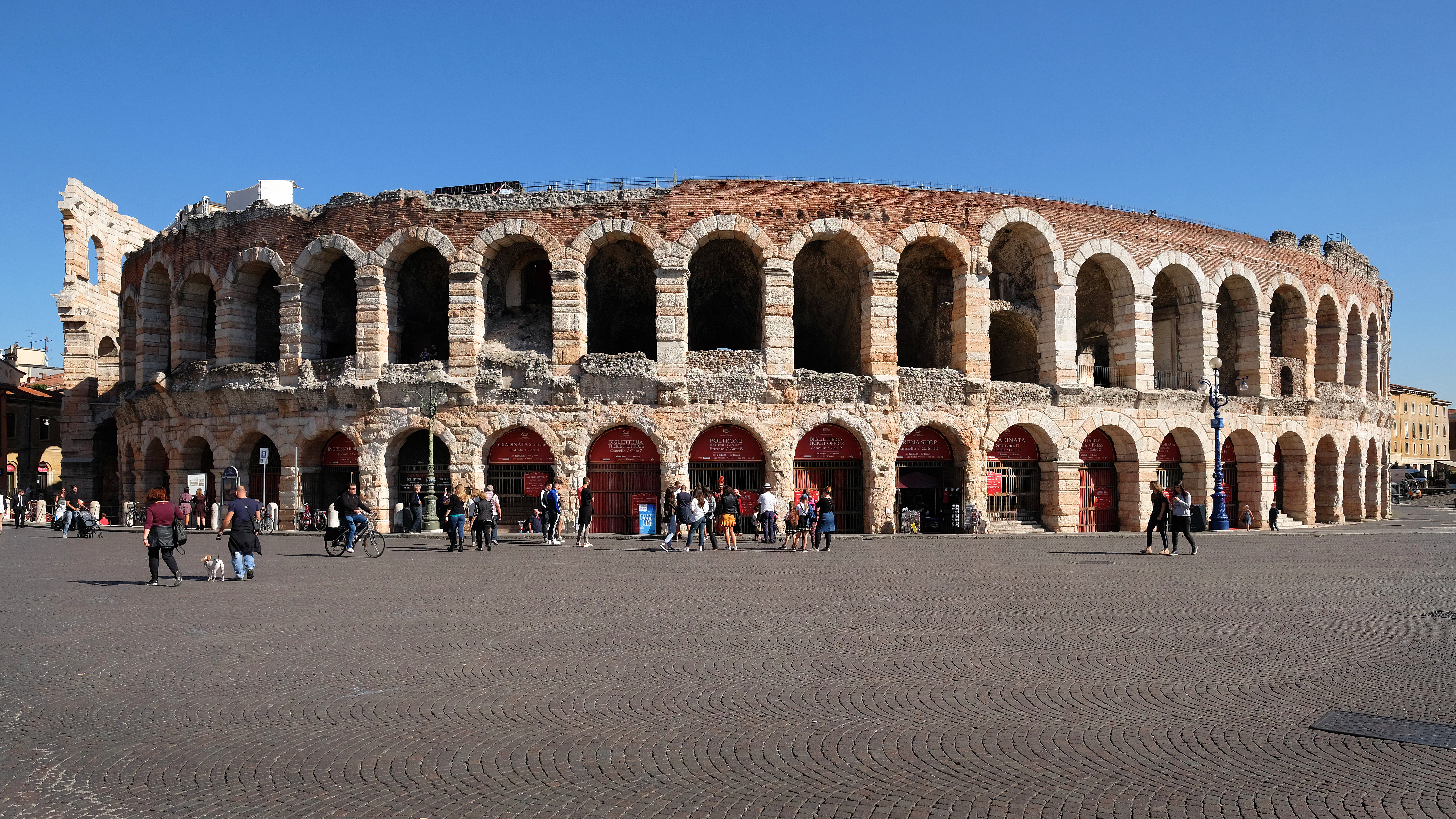 Arena di VeronaAttraction · 1.5h · €12
The Arena di Verona is a 1st-century Roman amphitheater and one of the best-preserved ancient structures of its kind. Seating roughly 15,000 spectators, it has hosted the famous Arena Opera Festival every summer since 1913, making it the world's largest open-air lyric theater.
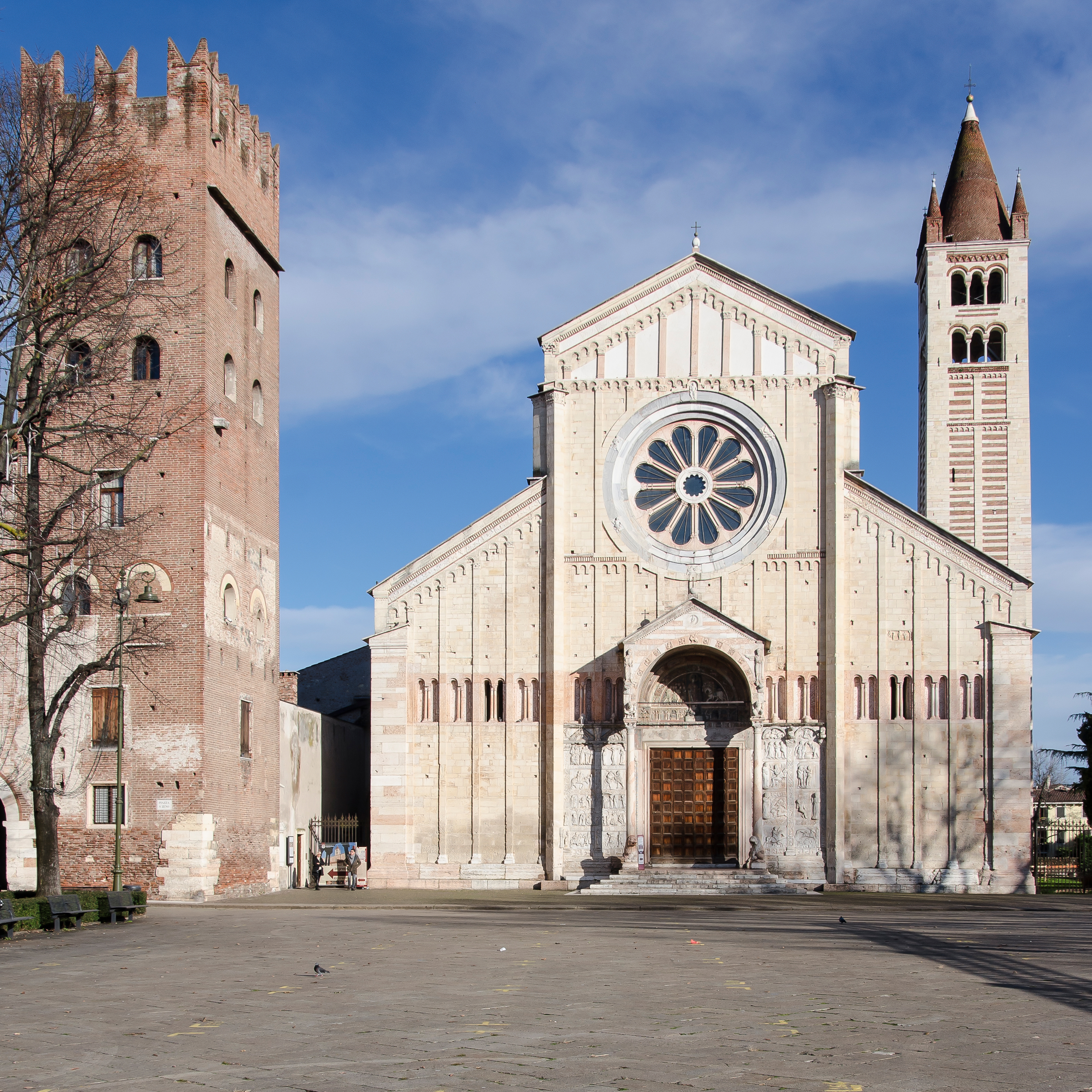 Basilica di San Zeno MaggioreAttraction · 1h · €3
The Basilica di San Zeno Maggiore is widely considered the finest Romanesque church in northern Italy. Dedicated to Verona's patron saint, it stands in a quiet piazza on the western edge of the old town and contains Andrea Mantegna's celebrated San Zeno Altarpiece.
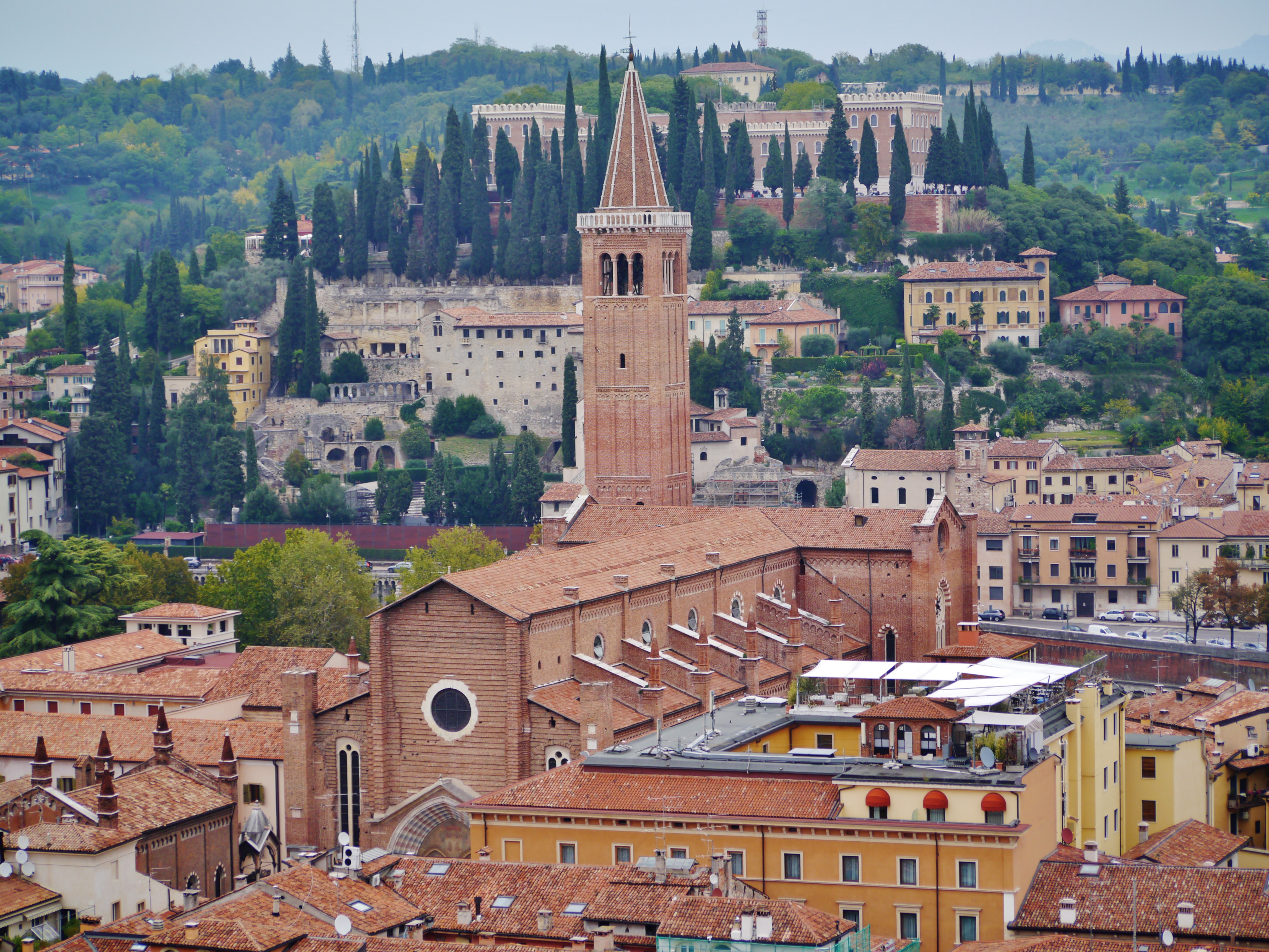 Basilica di Santa AnastasiaAttraction · 45 min · €3
Santa Anastasia is the largest church in Verona and the city's most impressive Gothic interior. Built by Dominican friars, it contains Pisanello's famous fresco of St George and the Princess and two charming crouching figures (Gobbi) supporting the holy water stoups.
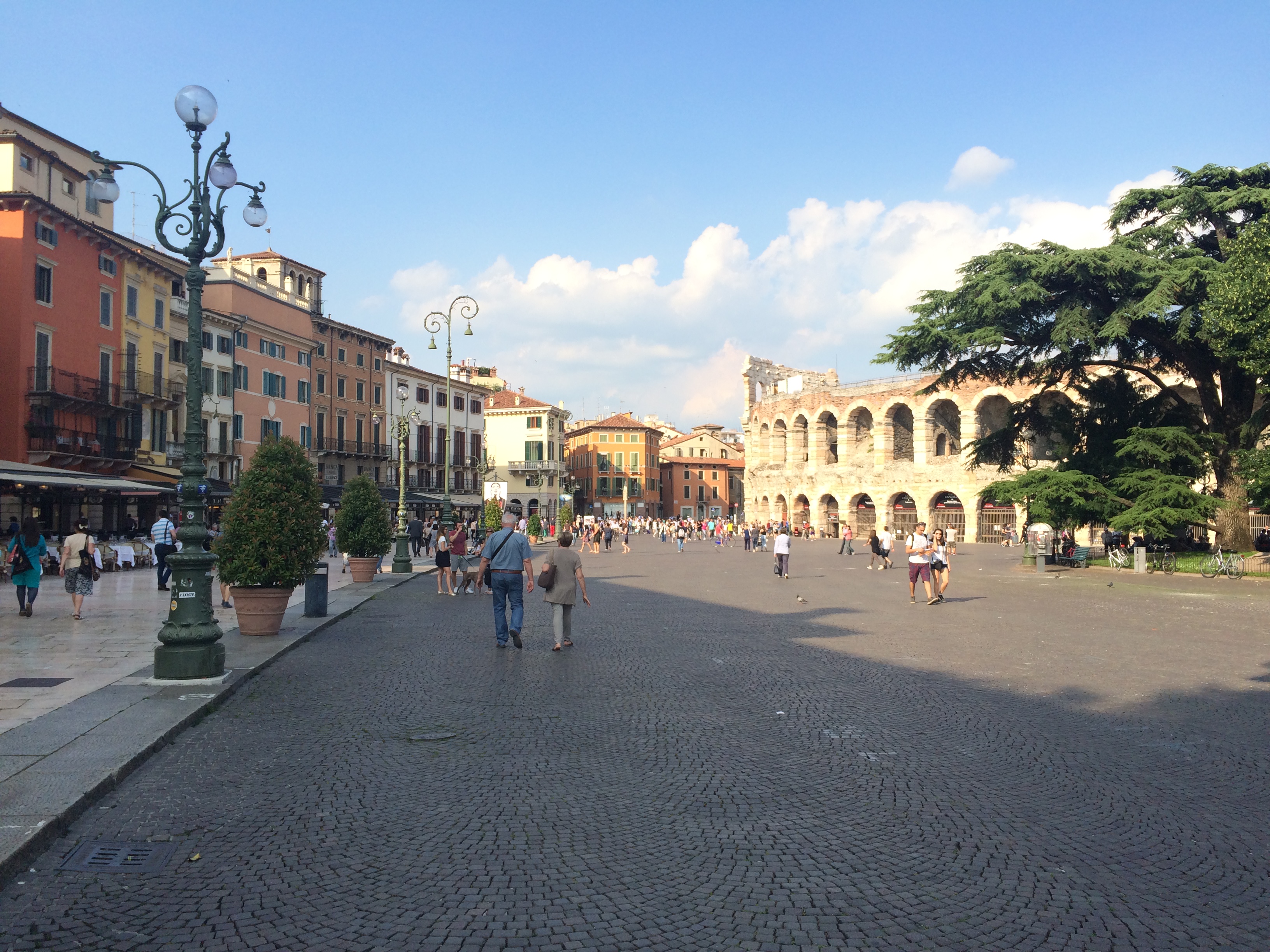 Piazza BraAttraction · 30 min · Free
Piazza Bra is Verona's largest square and the city's main gathering point, stretching from the Arena to the neoclassical Gran Guardia palace. The Liston, a wide travertine-paved promenade along the western edge, is the heart of the evening passeggiata.
- Duomo di VeronaAttraction · 45 min · €3
The Cattedrale di Santa Maria Matricolare, Verona's Duomo, is a layered structure blending Romanesque and Gothic architecture. Inside, Titian's Assumption of the Virgin (1535) anchors the first chapel on the left.
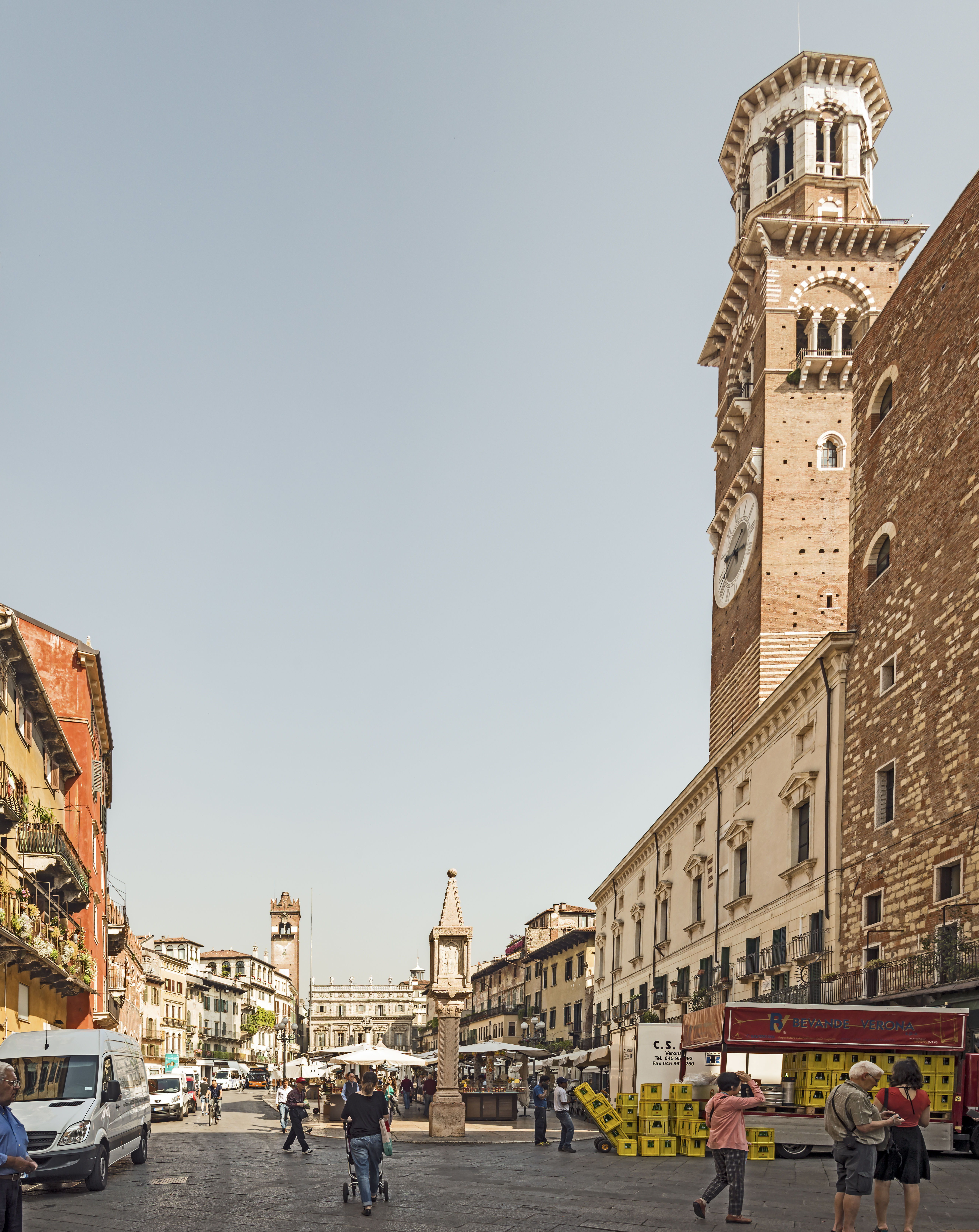 Piazza delle ErbeAttraction · 45 min · Free
Piazza delle Erbe occupies the site of the ancient Roman forum and has been Verona's civic heart for over 2,000 years. The square is framed by frescoed medieval buildings, the Baroque Palazzo Maffei, and the 14th-century Gardello Tower.
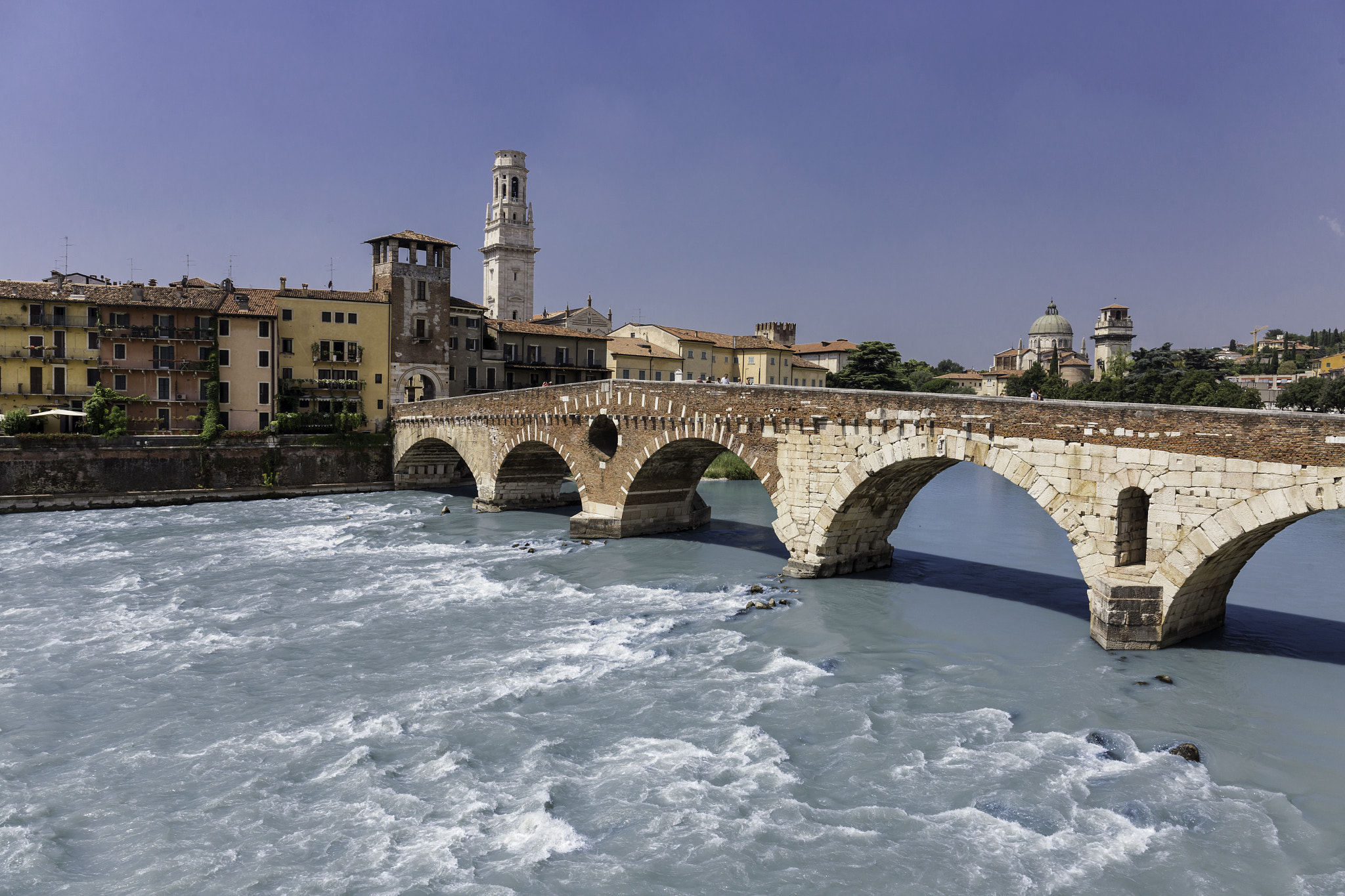 Ponte PietraAttraction · 15 min · Free
Ponte Pietra is the oldest bridge in Verona, originally constructed in 100 BC during the Roman Republic. Its five mismatched arches — two Roman, three medieval — create a uniquely picturesque crossing over the Adige.
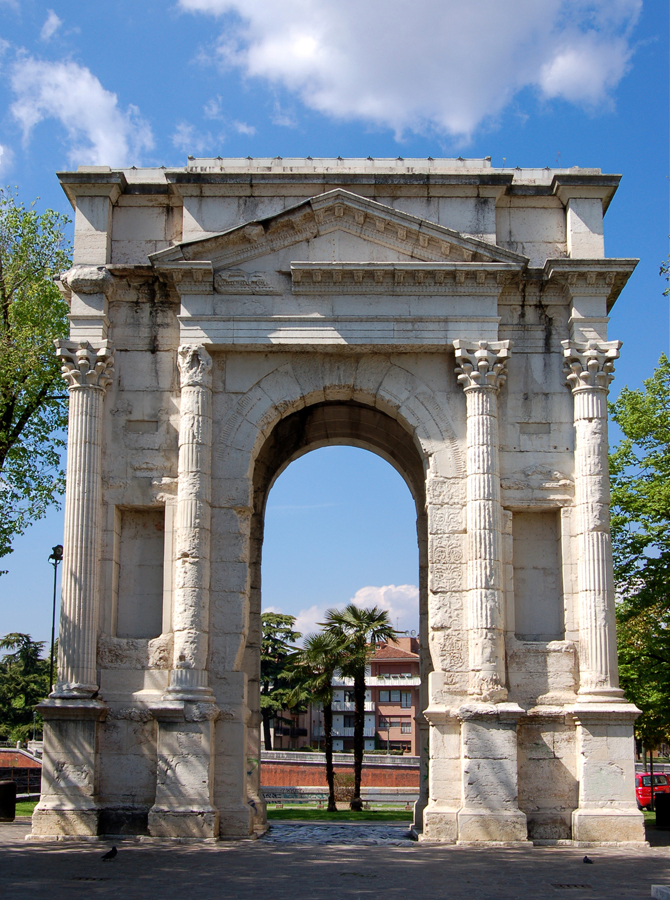 Arco dei GaviAttraction · 15 min · Free
The Arco dei Gavi is a 1st-century AD Roman triumphal arch that originally straddled the Via Postumia just outside the city walls. Dismantled by Napoleon's troops in 1805, it was reconstructed beside Castelvecchio in 1932.
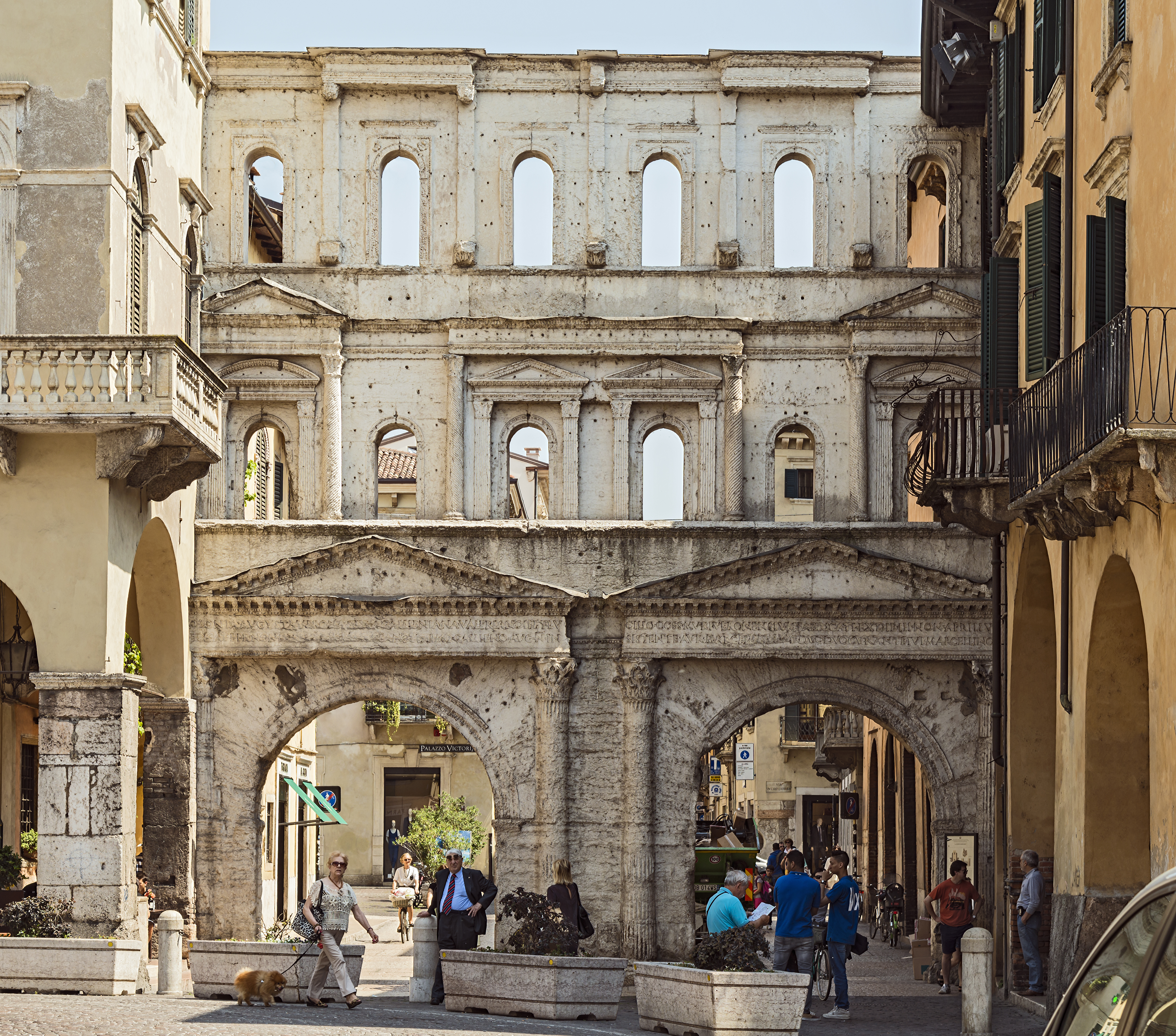 Porta BorsariAttraction · 15 min · Free
Porta Borsari is a 1st-century AD Roman gate that served as the main entrance to Verona along the Via Postumia. The surviving façade, with its two arched openings and Corinthian columns, is one of the city's most important Roman monuments.
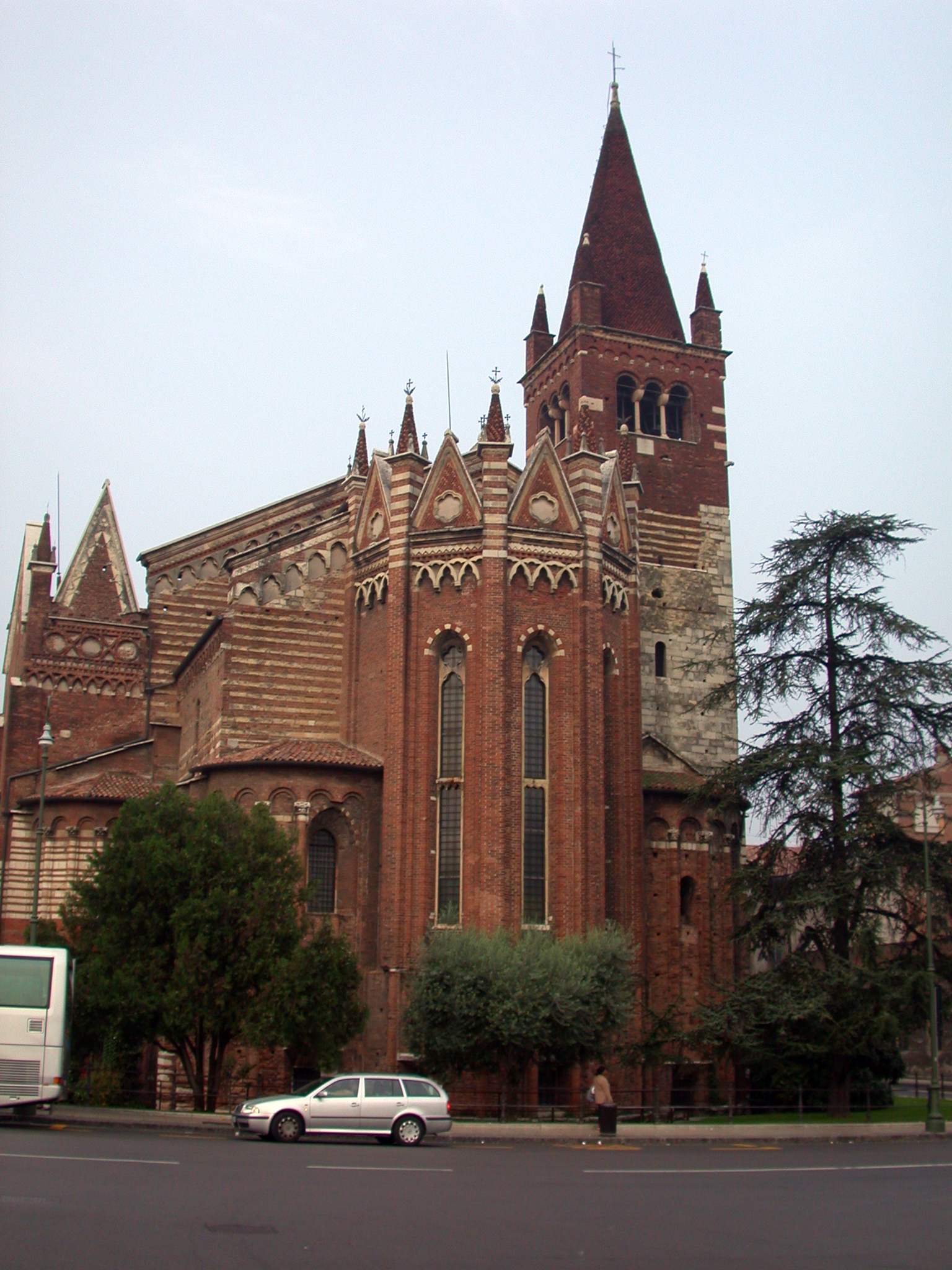 Chiesa di San Fermo MaggioreAttraction · 30 min · €3
San Fermo Maggiore is an extraordinary double church: a Romanesque lower church from the 11th century supporting a soaring Gothic upper church from the 14th century. The upper nave's ship-keel wooden ceiling is one of Verona's architectural treasures.
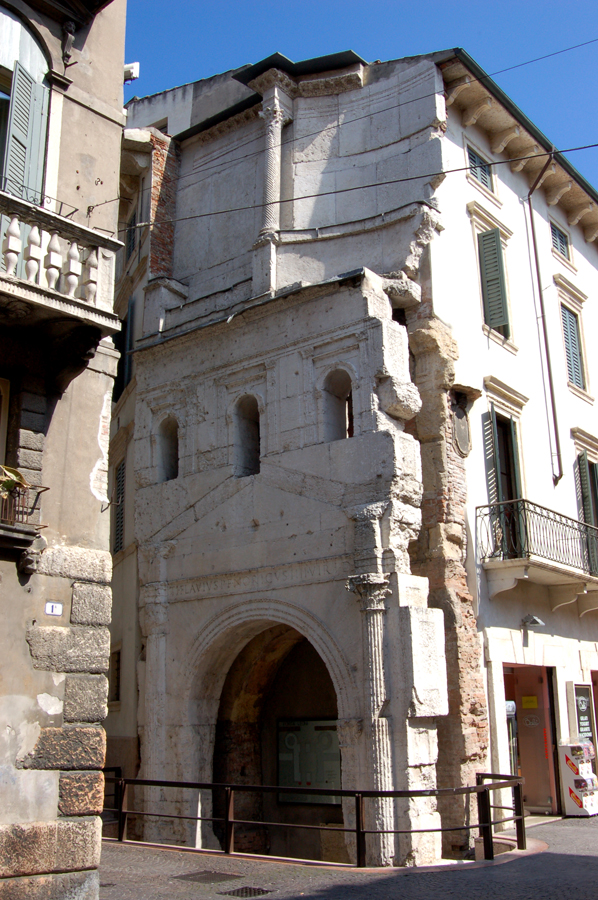 Porta LeoniAttraction · 15 min · Free
Porta Leoni is the remnant of a Roman city gate on the southeastern side of Verona, partially embedded within an 18th-century building. The exposed excavation below street level reveals the original Roman road surface and the gate's foundations.
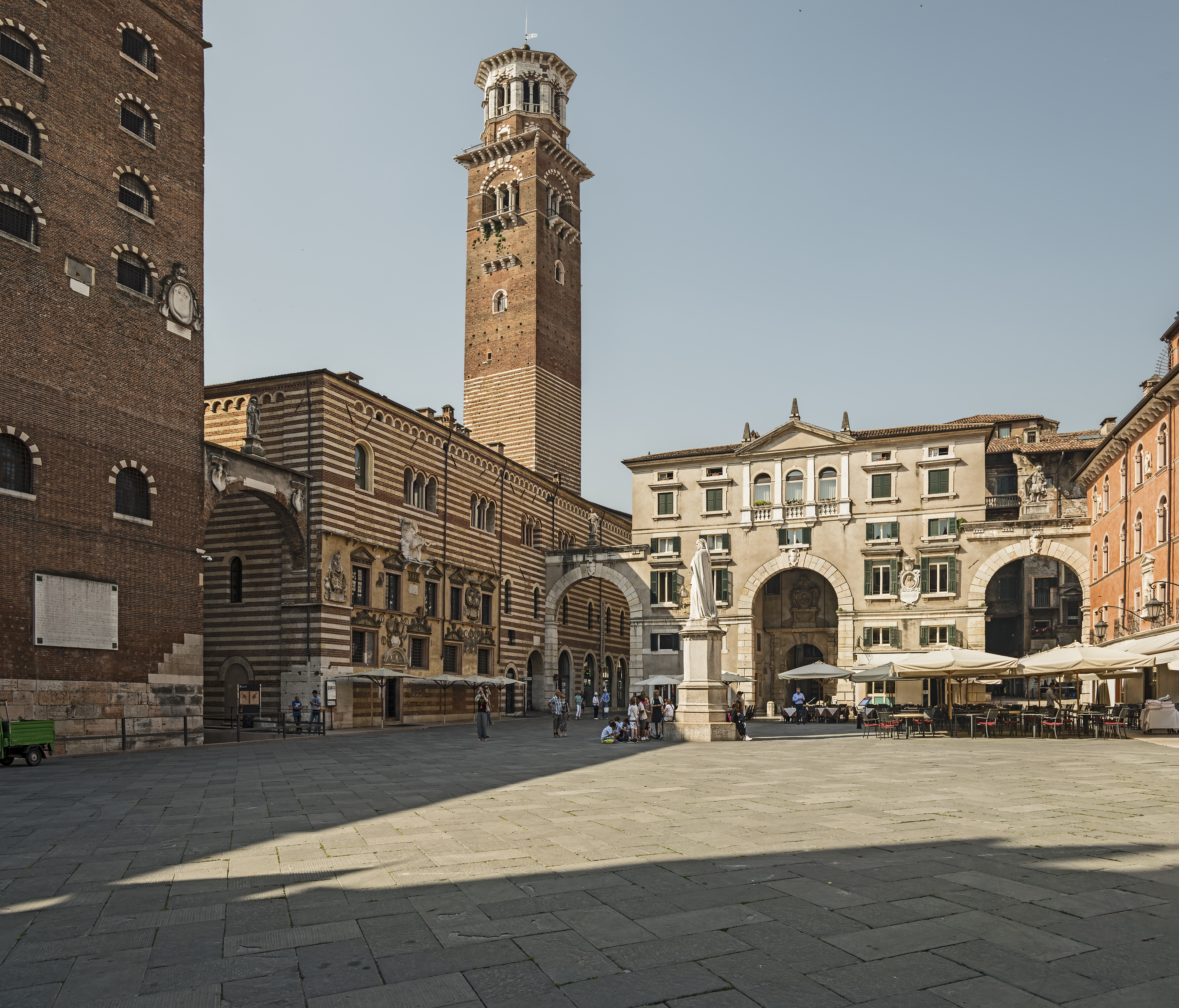 Piazza dei SignoriAttraction · 30 min · Free
Piazza dei Signori (also called Piazza Dante) is the elegant governmental counterpart to the market bustle of Piazza delle Erbe. Surrounded by Renaissance palaces connected by overhead arches, it feels like a grand outdoor salon.
 Teatro RomanoAttraction · 1h · €6
The Teatro Romano is a 1st-century BC Roman theater built into the hillside of San Pietro on the left bank of the Adige. Partially excavated in the 19th century, it still hosts performances during the Estate Teatrale Veronese summer festival.
 Casa di GiuliettaAttraction · 45 min · €6
Casa di Giulietta is a 13th-century townhouse on Via Cappello attributed to the Capuleti family, famed as Shakespeare's Juliet. Its small courtyard with a bronze Juliet statue and the added balcony is one of Italy's most photographed spots.
 Arche ScaligereAttraction · 30 min · Free
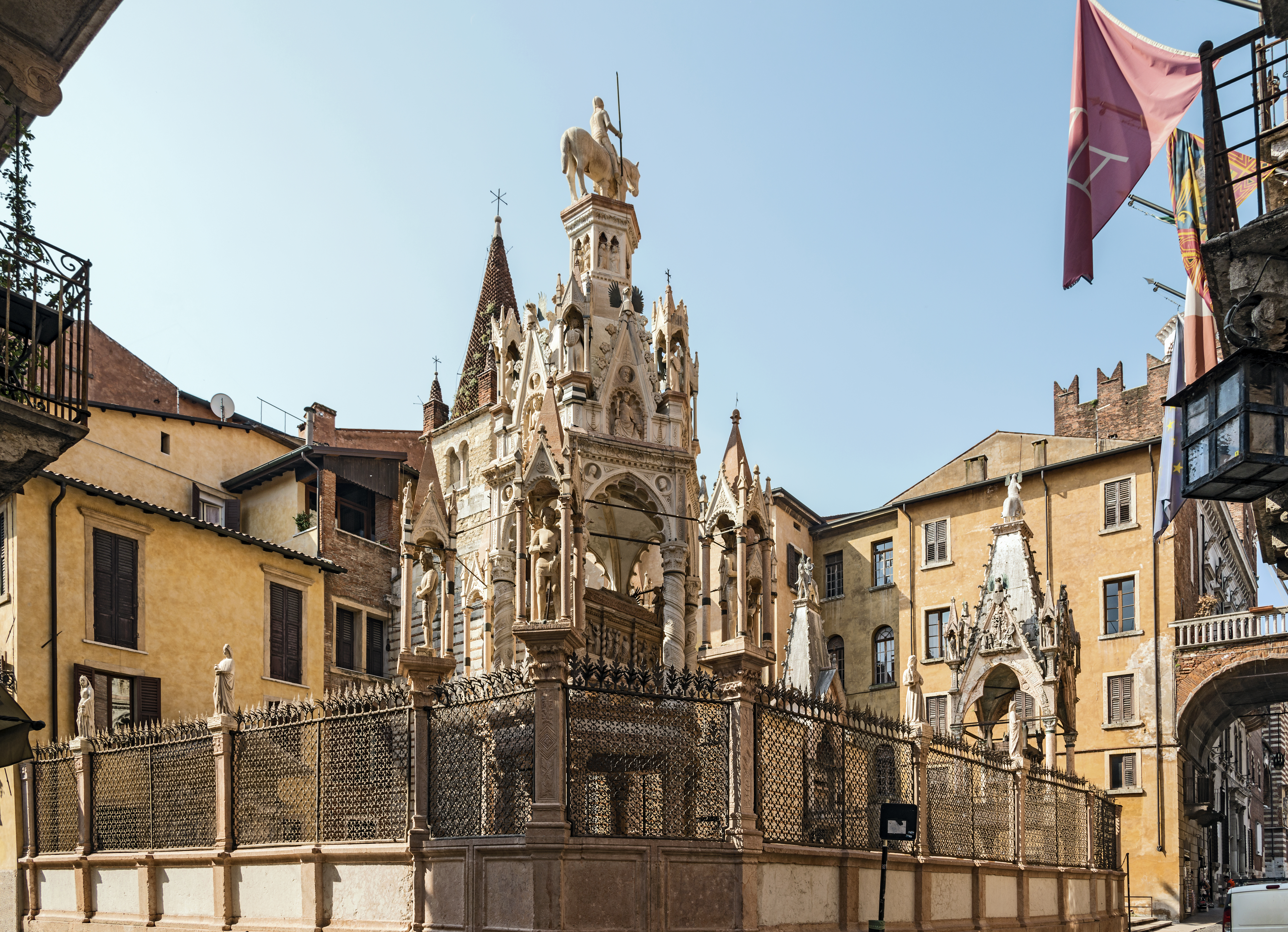
The Arche Scaligere are a group of five elaborate Gothic funerary monuments erected for the Scaliger lords who ruled Verona from 1260 to 1387. They stand in a small enclosure next to the church of Santa Maria Antica.
 Ponte ScaligeroAttraction · 20 min · Free
Ponte Scaligero (also called Ponte di Castelvecchio) is a fortified medieval bridge spanning the Adige River, directly connected to Castelvecchio. Its three distinctive red-brick arches and crenellated battlements make it one of Verona's most recognizable landmarks.