Loading place...
Skip to main content
Photos
5 images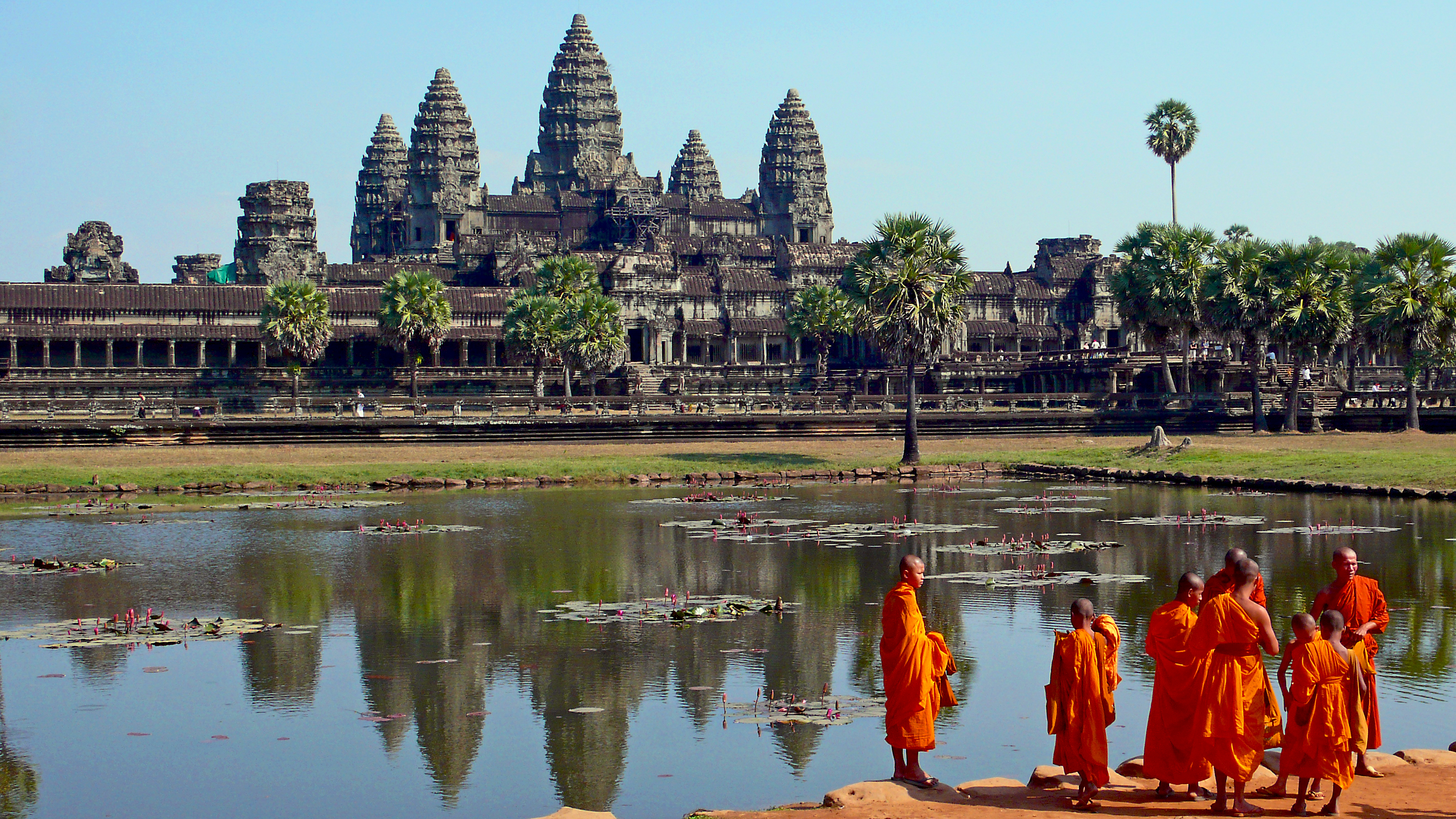


Duration
180 min
Entry Fee
KHR37
Overview
Angkor Wat is the world's largest religious monument, a 162.6-hectare temple complex built by King Suryavarman II in the early 12th century as a Hindu temple dedicated to Vishnu. Its five iconic towers represent the peaks of Mount Meru, the mythological home of the gods. Today it serves as a symbol of Cambodia, appearing on the national flag.
Highlights
- Bas-Relief Gallery: A 600-metre continuous carved narrative depicting scenes from the Ramayana, the Mahabharata, and historical Khmer battles — one of the longest in the world.
- Central Tower: The steep climb to the third level rewards visitors with panoramic views over the forested temple grounds.
- Sunrise Silhouette: The temple's west-facing orientation creates one of the most photographed sunrise backdrops on Earth.
History
Construction began around 1113 CE and took approximately 30 years. Unlike most Khmer temples, Angkor Wat faces west, which scholars believe links it to Vishnu's association with the western direction. The temple gradually transitioned from Hindu to Buddhist use in the late 13th century and has been in continuous religious use ever since.
Visitor Tips
- Tip 1: Arrive before 05:30 for the classic sunrise reflection shot from the north reflecting pool.
- Tip 2: Wear knee-length clothing and covered shoulders — dress codes are enforced at the upper levels.
- Duration: 2–3 hours for a thorough visit, or 4+ hours if combining sunrise and interior exploration.
Tags
#iconic#unesco#architecture#history#temple
Location
See something wrong with this page? Help us fix it →