Loading place...
Skip to main content
Photos
5 images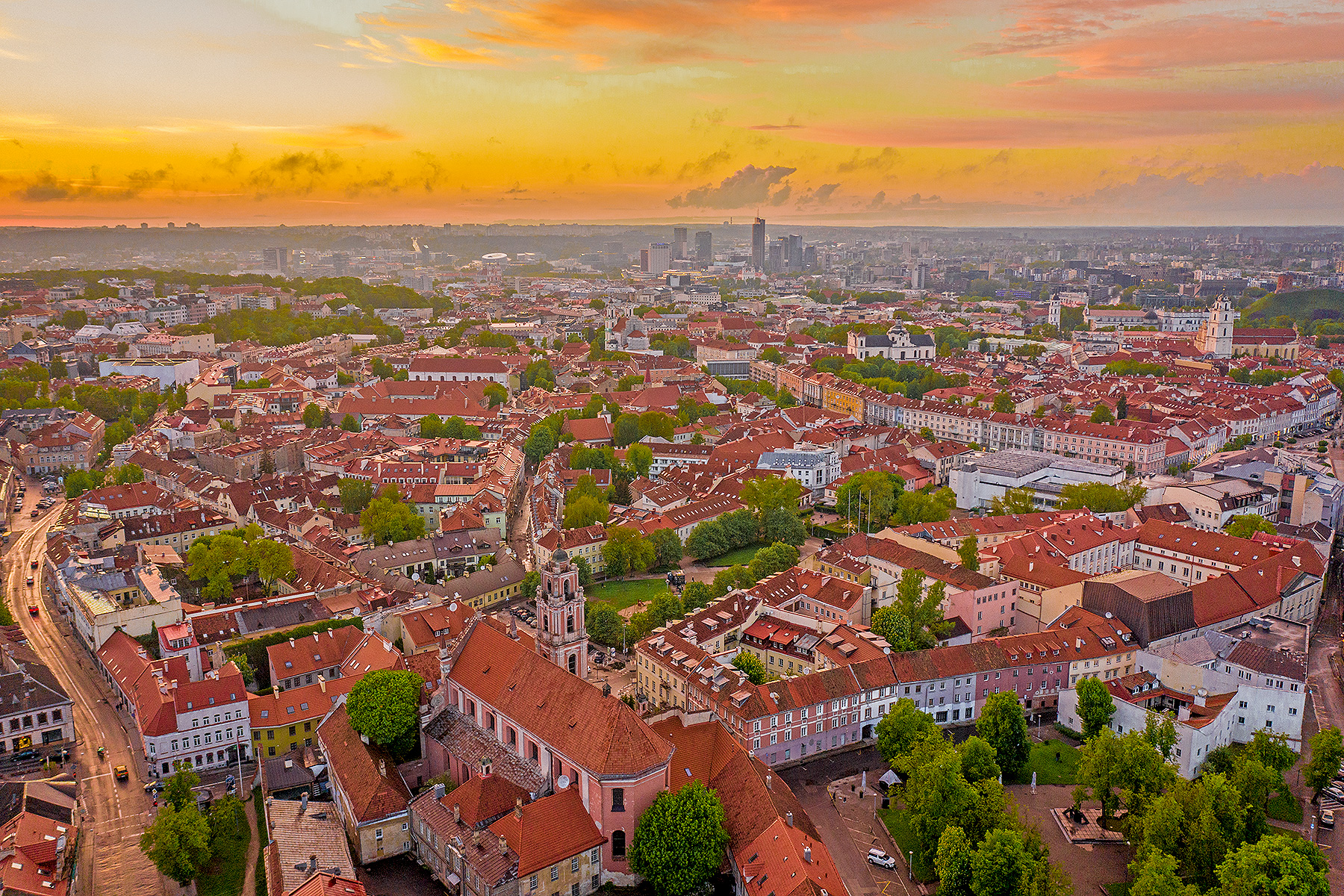


Duration
180 min
Entry Fee
Free
Overview
Vilnius Old Town is one of the largest surviving medieval old towns in Europe, covering roughly 3.6 square kilometres. Inscribed as a UNESCO World Heritage Site in 1994, it encompasses over 1,500 buildings with an extraordinary mix of Gothic, Renaissance, Baroque, and Neoclassical architecture. The labyrinth of narrow cobblestoned streets, hidden courtyards, and church towers creates an atmosphere unlike any other European capital.
Highlights
- Architectural diversity: No other city in the Baltics displays such a range of European architectural styles in such a compact area.
- Hidden courtyards: Many buildings conceal inner courtyards accessible through arched passages — explore freely.
- UNESCO recognition: Listed for its outstanding universal value as an example of an Eastern European urban settlement shaped by diverse cultural influences.
History
Vilnius became the capital of the Grand Duchy of Lithuania in 1323 under Grand Duke Gediminas. Its Old Town grew around the castle and cathedral, absorbing Lithuanian, Polish, Jewish, German, and Russian cultural layers over seven centuries. Despite wars and occupations, the urban fabric survived remarkably intact.
Visitor Tips
- Tip 1: Allow at least half a day to wander without a fixed plan — spontaneous discoveries are the greatest reward.
- Tip 2: Pick up a walking map at the tourist information centre on Vilniaus Street.
- Duration: 2–4 hours (walking exploration).
Tags
#neighborhood#unesco#walk#history#iconic
Location
See something wrong with this page? Help us fix it →