Loading place...
Skip to main content
Photos
5 images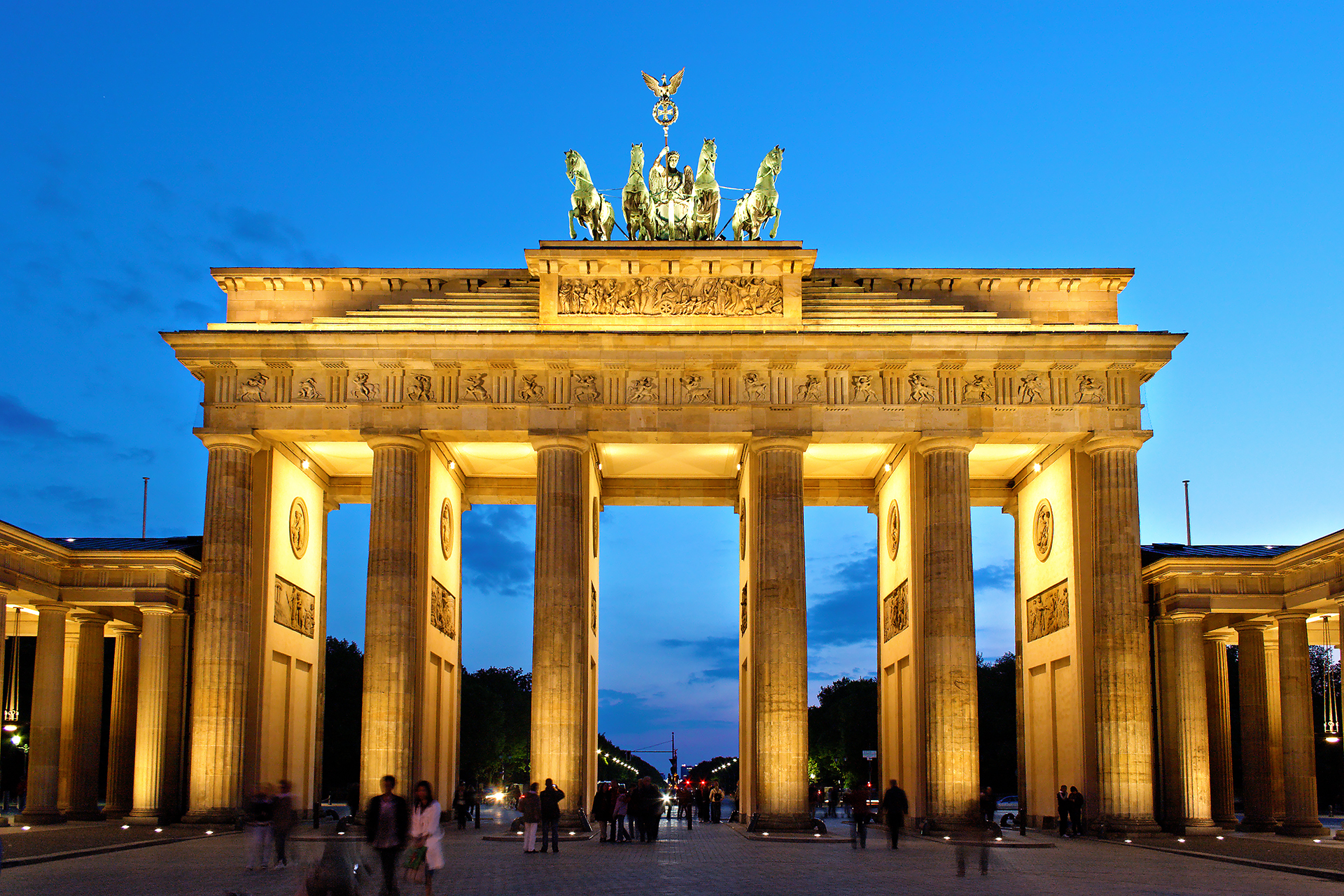


Duration
30 min
Entry Fee
Free
Overview
The Brandenburg Gate is Berlin's most recognized landmark, an 18th-century neoclassical triumphal arch that has become the definitive symbol of German reunification. Designed by Carl Gotthard Langhans in 1791, it stands at the western end of Unter den Linden.
Highlights
- The Quadriga: Johann Gottfried Schadow's copper chariot driven by Victoria, goddess of victory, crowns the gate.
- Pariser Platz: The elegant square framing the gate, flanked by the Hotel Adlon, French Embassy, and Academy of Arts.
- Night illumination: The gate glows dramatically after dark, making it one of Berlin's best photo opportunities.
History
Built 1788–1791 as a symbol of peace under Frederick William II, the gate later witnessed Napoleon's triumphal entry (1806), Nazi torchlight parades, Cold War division, and the euphoric night of 9 November 1989 when the Wall fell.
Visitor Tips
- Best time: Visit at sunrise or after 21:00 to avoid crowds and catch the illumination.
- Combine with: The Reichstag (200 m north) and the Memorial to the Murdered Jews of Europe (300 m south).
- Duration: 15–30 minutes.
Tags
#iconic#history#photo_op
Links
Location
See something wrong with this page? Help us fix it →