Loading place...
Skip to main content
Photos
4 images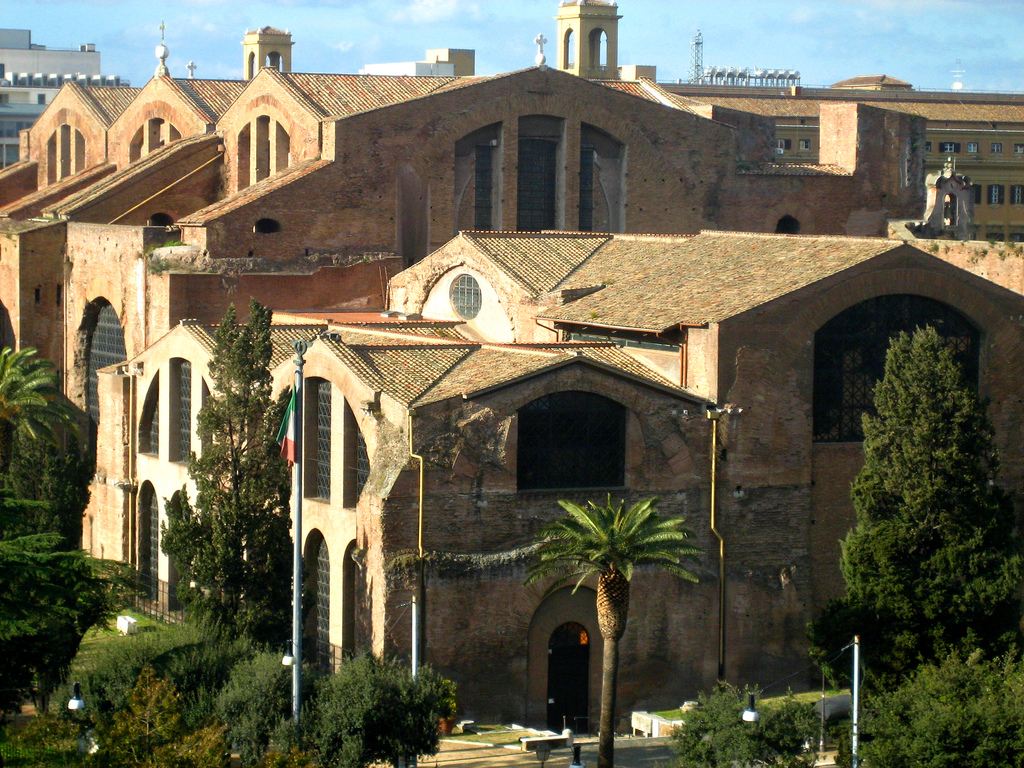


Duration
90 min
Entry Fee
€7
Overview
The Baths of Diocletian (Terme di Diocleziano) represent the grandest, most vast public bathing complex ever constructed in ancient Rome. It is so unbelievably huge that today its incredible footprint houses a spectacular museum, two massive churches, and a major traffic roundabout.
Highlights
- The Cloister of Michelangelo: The peaceful, massive Renaissance cloister belonging to the Santa Maria degli Angeli church, filled with towering ancient cypress trees and hundreds of massive Roman sculptural fragments.
- The Aula Ottagona: A massive, impressive ancient octagonal hall originally serving as part of the frigidarium, now dramatically housing massive bronze statues retrieved from the Roman baths.
- The Complex: Simply trying to grasp the scale—the original complex spanned nearly 32 acres and contained massive libraries, gymnasiums, and swimming pools capable of incredibly holding 3,000 bathers simultaneously.
History
Completed in record time between 298 and 306 AD, using the brutal forced labor of thousands of Christians. The massive baths functioned until the 6th century when invading Goths cut the aqueducts. In 1561, the brilliant aging Michelangelo converted the massive ruined main hall into the awe-inspiring basilica of Santa Maria degli Angeli e dei Martiri, utilizing the soaring, 30-metre ancient Roman brick vaulting as the church ceiling.
Visitor Tips
- Context: To truly grasp what the massive brick ruins once looked like, visit the church of Santa Maria degli Angeli right next door. You are literally standing inside the massive main pool room (the frigidarium) of the ancient baths.
Tags
#ancient_rome#history#museum#architecture
Links
Location
See something wrong with this page? Help us fix it →