Loading place...
Skip to main content
Photos
2 images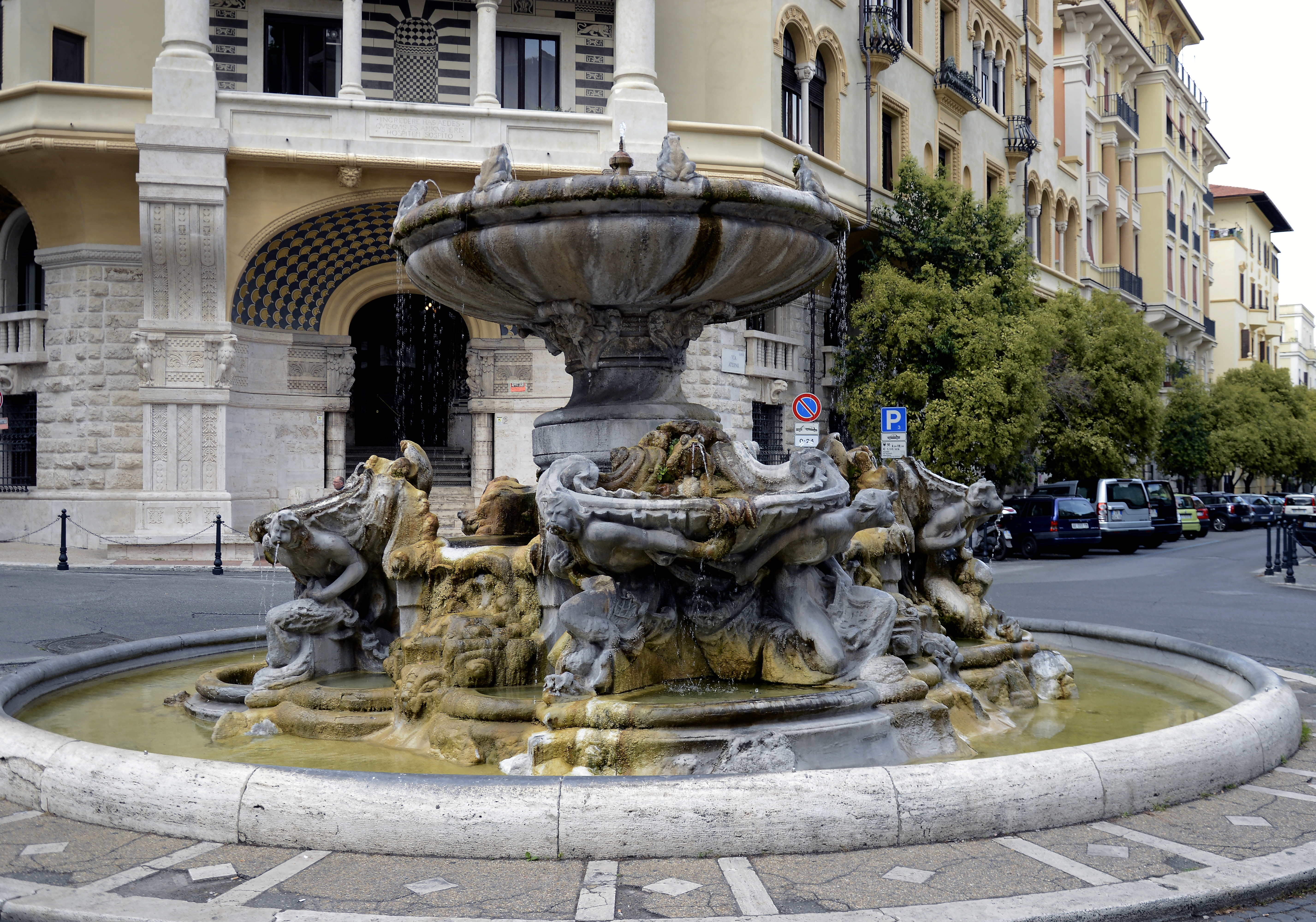

Duration
30 min
Entry Fee
Free
Overview
Quartiere Coppedè is a small and surreal neighborhood in Rome's Trieste district, comprising 26 small palaces and 17 detached houses built between 1915 and 1927 by the eclectic architect Gino Coppedè. The result is unlike anything else in Rome — a dreamlike blend of Liberty, Art Deco, Gothic, Baroque, Medieval, and Greek references compressed into a single city block.
Highlights
- Fontana delle Rane: The neighborhood's centerpiece in Piazza Mincio — a circular fountain decorated with frogs that became legendary when the Beatles allegedly jumped into it after a concert at the nearby Piper club.
- Villino delle Fate: The "Fairies' Building," a residence of total asymmetry combining marble, brick, travertine, terracotta, and glass in a composition that defies any single historical style.
- Hidden Details: Spiders, bees, frogs, and mythological figures are embedded throughout the facades — the neighborhood rewards slow, observational walking.
History
Gino Coppedè began designing the complex in 1915 for a wealthy Florentine client and continued building until his death in 1927, after which his son-in-law Paolo Emilio Andrè completed the remaining structures. Director Dario Argento was so captivated by the neighborhood's uncanny atmosphere that he used it as a location for two of his horror films: Inferno and L'uccello dalle piume di cristallo.
Visitor Tips
- The neighborhood is freely accessible at all times — no ticket, no opening hours.
- Late afternoon light brings out the warm tones of the facades and the depth of the ornamental details.
- Metro B to Sant'Agnese/Annibaliano or Policlinico, then a 15-minute walk. Largely unknown even to many Romans — a genuine discovery.
Tags
#architecture#local#free_entry
Links
Location
See something wrong with this page? Help us fix it →